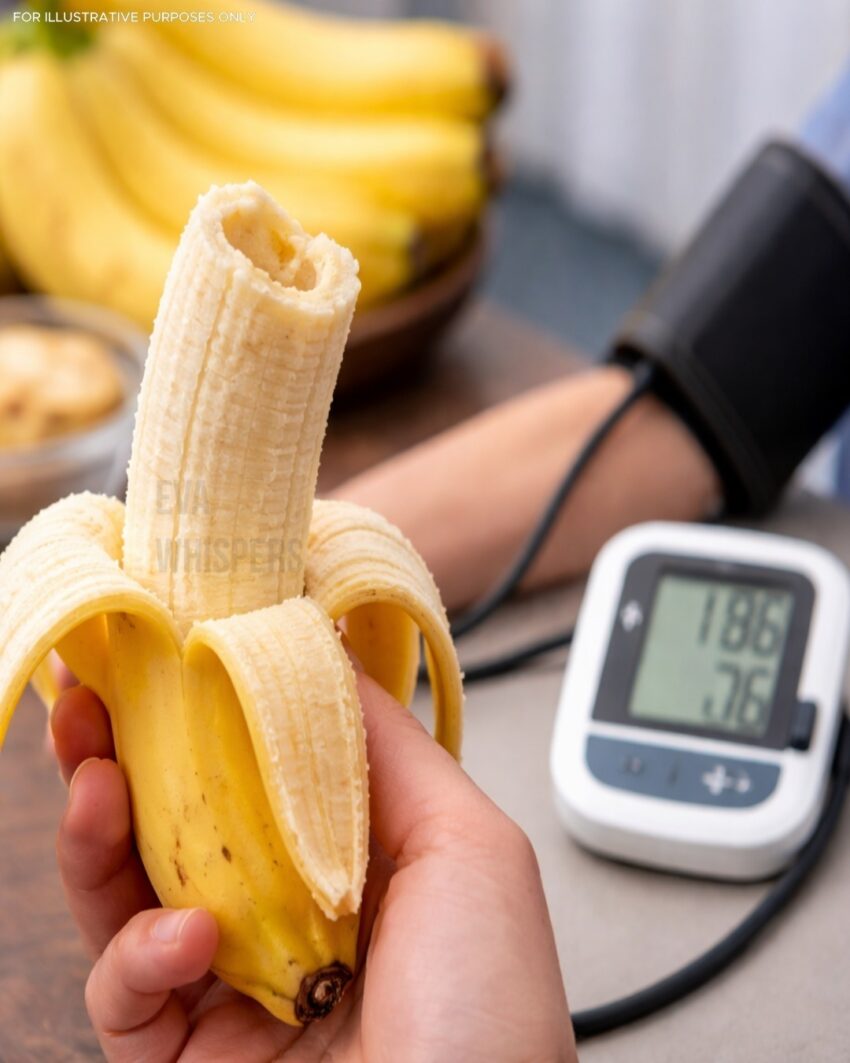
Eating a banana can affect your blood pressure because bananas are high in potassium, a mineral that plays a key role in regulating blood pressure. Here’s a detailed explanation:
🍌 How Bananas Affect Blood Pressure
- Potassium Helps Balance Sodium
- Sodium (salt) raises blood pressure by retaining water.
- Potassium helps flush excess sodium from the body via urine.
- This reduces strain on blood vessels and lowers blood pressure.
- Relaxing Blood Vessel Walls
- Potassium signals the blood vessel walls to relax and dilate.
- This makes it easier for blood to flow, which can reduce blood pressure.
- Supporting Heart Function
- Adequate potassium helps maintain healthy heart rhythm, which indirectly supports stable blood pressure.
✅ What Science Says
- Studies show that a diet rich in potassium (like eating bananas) is linked to lower risk of hypertension.
- One medium banana has about 400–450 mg of potassium—about 10% of the recommended daily intake for adults.
⚠️ Considerations
- People with kidney problems or on potassium-sparing medications should be cautious, as too much potassium can be harmful.
- Eating a banana alone won’t dramatically lower blood pressure—it works best as part of a balanced diet rich in fruits, vegetables, and low sodium.
In short: Eating a banana can help lower or stabilize blood pressure thanks to its potassium content, making it a heart-friendly snack.
If you want, I can make a list of 10 other fruits and foods that naturally lower blood pressure for easy daily choices. Do you want me to do that?
