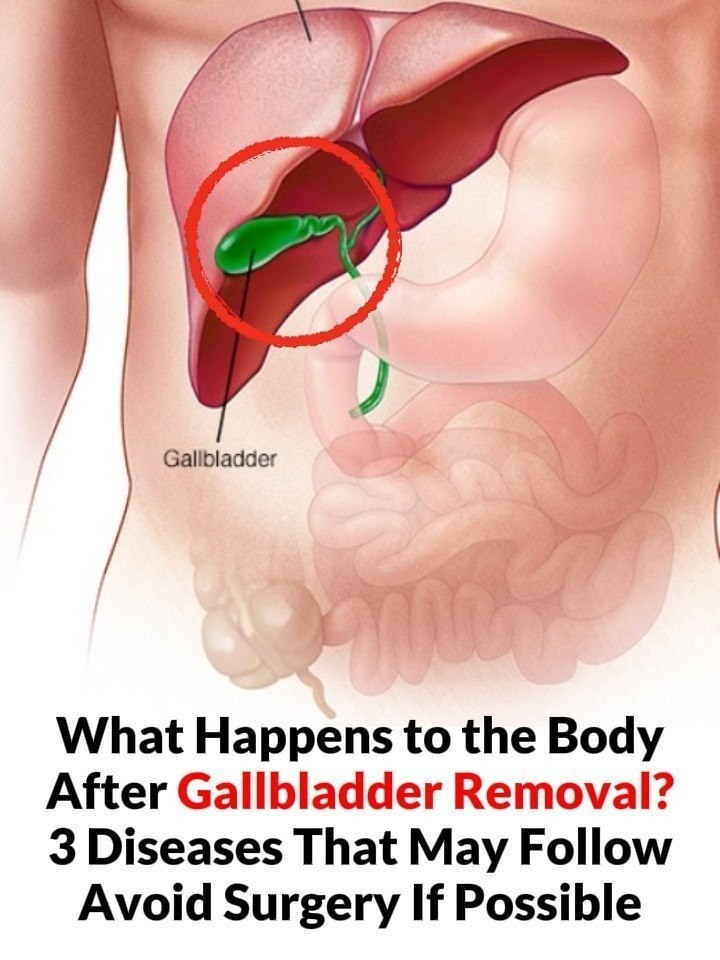
Gallbladder removal (cholecystectomy) is a very common and generally safe surgery. Most people live normally afterward. But it does change how bile flows through your digestive system, and in some cases it can lead to ongoing symptoms or specific conditions.
First, a quick baseline:
What the gallbladder actually does
Your liver produces bile (helps digest fats). The gallbladder stores and concentrates it, then releases it in controlled bursts when you eat fatty food.
After removal:
- Bile no longer gets stored
- It flows continuously into the intestine
- Fat digestion still works, but less “controlled”
Most people adapt within weeks to months.
3 conditions that can follow gallbladder removal
1) Postcholecystectomy Syndrome (PCS)
This is an umbrella term, not a single disease.
What it includes:
- Persistent or recurring abdominal pain
- Bloating, nausea
- Indigestion, especially after fatty meals
- Sometimes diarrhea or reflux-like symptoms
Why it happens:
- Small bile duct stones left behind
- Changes in bile flow
- Underlying stomach or intestinal conditions that were already present but unrecognized
Important point:
Many cases are mild or temporary, but a smaller group may need further evaluation.
2) Bile Acid Diarrhea (Chronic post-surgery diarrhea)
One of the most common long-term effects.
Symptoms:
- Frequent loose stools
- Urgency after eating
- Worse after fatty meals
- Sometimes nighttime bowel movements
Why it happens:
Without a gallbladder, bile drips continuously into the intestine. In some people, excess bile reaches the colon and acts like a laxative.
Treatment (important):
- Bile acid binders (like cholestyramine)
- Low-fat diet adjustments
- Sometimes fiber supplementation
This condition is treatable, but often underdiagnosed.
3) Sphincter of Oddi Dysfunction (SOD)
This is less common but more painful when it occurs.
What it is:
The Sphincter of Oddi is a muscular valve controlling bile and pancreatic juice flow into the intestine.
Symptoms:
- Severe upper abdominal pain (similar to gallbladder attacks)
- Pain after eating
- Sometimes nausea or elevated liver/pancreatic enzymes
Why it may appear after surgery:
In some people, pressure changes in the bile system after gallbladder removal affect how this valve works.
Management:
- Medications in mild cases
- Endoscopic procedures in severe cases (not always needed)
About “avoiding surgery if possible”
It’s understandable to want to avoid surgery, but it’s not always the safest option.
Gallbladder removal is usually recommended when there are:
- Recurrent gallstones causing pain
- Gallbladder infection (cholecystitis)
- Blockage of bile ducts
- Pancreatitis from gallstones
Delaying surgery in these cases can sometimes lead to:
- Emergency infection
- Pancreas inflammation
- Bile duct obstruction (more serious than surgery itself)
Key takeaway
Most people do not develop serious long-term disease after gallbladder removal and live completely normal lives. The three issues above:
- Postcholecystectomy syndrome
- Bile acid diarrhea
- Sphincter of Oddi dysfunction
…are possible but not guaranteed, and many are manageable if they occur.
If you want, I can also explain:
- Foods to avoid after gallbladder removal
- How long recovery really takes
- Or how to reduce the risk of these complications before/after surgery
