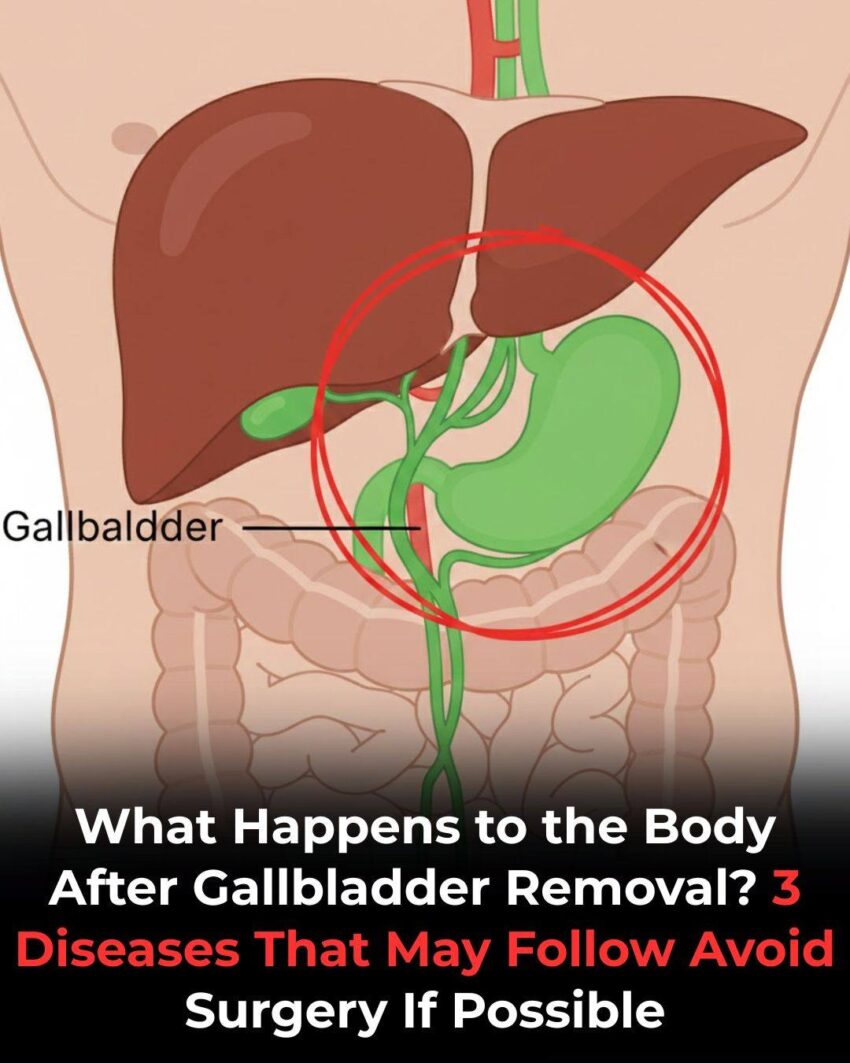
Gallbladder removal (called Cholecystectomy) is a common and generally safe surgery, but it does change how your body handles digestion. Claims like “avoid it at all costs” are misleading—sometimes it’s medically necessary.
Here’s a clear, realistic breakdown 👇
🧠 What changes after removal?
The gallbladder stores bile. After surgery:
- Bile flows directly from the liver into the intestines
- Fat digestion still happens, but less efficiently at once
Most people live completely normal lives after recovery 👍
⚠️ Possible issues (not guaranteed)
1. Digestive problems
- Bloating, gas, or diarrhea (especially after fatty meals)
- Usually temporary
Related condition: Postcholecystectomy syndrome
2. Increased risk of bile reflux
- Bile may flow back into the stomach
- Can cause irritation or burning sensation
Related to: Bile reflux
3. Slight metabolic changes
Some studies suggest a small increased risk of:
- Nonalcoholic fatty liver disease
- Irritable bowel syndrome
⚠️ Important: These risks are not guaranteed and often depend on lifestyle.
🚫 Should you avoid surgery?
Not necessarily.
You may need surgery if you have:
- Painful gallstones
- Infection or inflammation (Cholecystitis)
- Blocked bile ducts
👉 In these cases, delaying surgery can be more dangerous than the operation itself.
✅ How to stay healthy after surgery
- Eat smaller, low-fat meals (especially at first)
- Gradually reintroduce fats
- Stay active and maintain a healthy weight
🧾 Bottom line
- Gallbladder removal is safe for most people
- Some mild digestive changes can happen
- Serious long-term problems are not common
- Surgery should be based on medical need—not fear
If you want, I can tell you how to manage diet before and after gallbladder issues in a simple, practical way 👍
