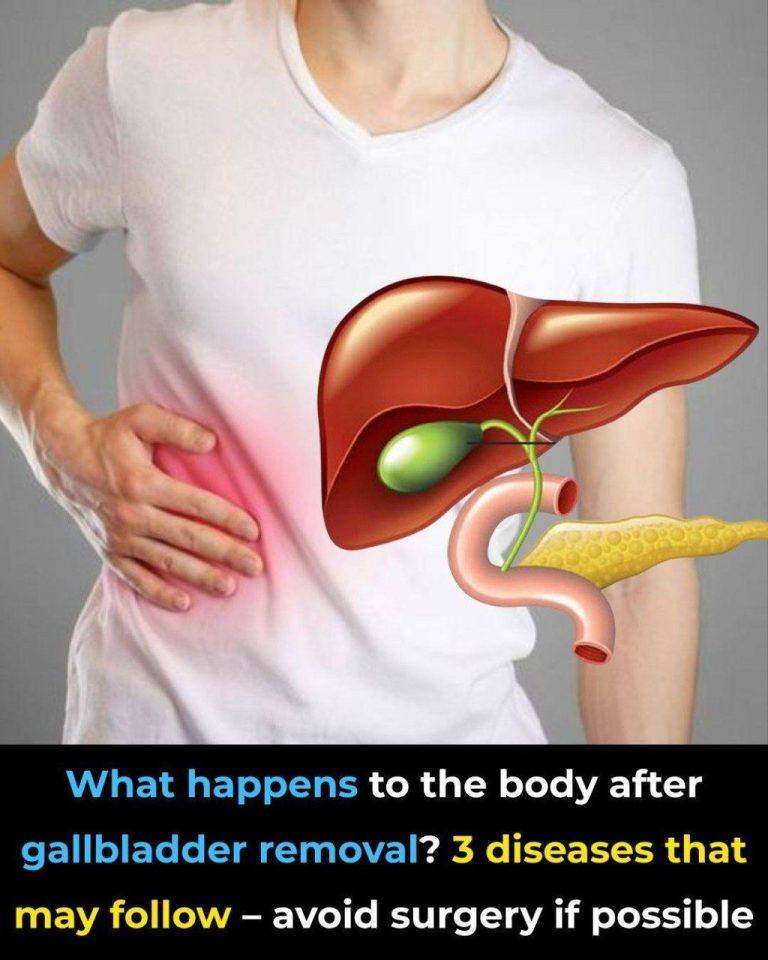
The headline is misleading. Removing the gallbladder (a cholecystectomy) doesn’t doom you to new diseases, and sometimes it’s the safest, most effective treatment—for example with repeated gallstone attacks or complications.
What’s true is that your digestion changes a bit, and a minority of people develop ongoing symptoms. Here’s a balanced, evidence-based view.
🫀 What the gallbladder does (and what changes after surgery)
The gallbladder stores and concentrates bile, releasing it when you eat (especially fatty foods).
After removal:
- Bile flows continuously from the liver into the intestine
- Most people digest food normally, but some notice sensitivity to fatty meals at first
⚠️ Possible issues after gallbladder removal
1) Digestive upset (most common, often temporary)
- Loose stools or diarrhea
- Bloating or gas, especially after fatty foods
👉 Usually improves over weeks to months with diet adjustments
2) Bile acid diarrhea (less common)
- Frequent, watery stools due to excess bile reaching the colon
- Can be treated if persistent
3) “Post-cholecystectomy syndrome”
- Ongoing upper abdominal discomfort, indigestion, or nausea
- Sometimes due to other issues (like remaining stones or reflux)
👉 Not a single disease—more a group of symptoms
🧠 Important reality check
- Most people recover well and live normal, healthy lives without a gallbladder
- There is no solid evidence that surgery directly causes major chronic diseases in most patients
- The risks of not treating serious gallbladder problems (infection, pancreatitis, obstruction) can be much higher
🍽️ How to feel better after surgery
- Eat smaller, more frequent meals
- Limit very fatty, fried, or greasy foods (especially early on)
- Gradually reintroduce normal foods
- Stay hydrated and include fiber
❗ When surgery is actually necessary
Doctors recommend removal when there is:
- repeated painful gallstone attacks
- inflammation or infection
- blocked bile ducts
- complications like pancreatitis
👉 In these cases, “avoiding surgery” can be risky
🧾 Bottom line
Gallbladder removal can cause temporary digestive changes and, in some cases, ongoing symptoms—but it does not usually lead to serious diseases.
👉 The decision should be based on your condition, not fear-based headlines
If you want, I can explain:
👉 when gallstones can be managed without surgery
👉 or what diet works best after gallbladder removal in daily life
