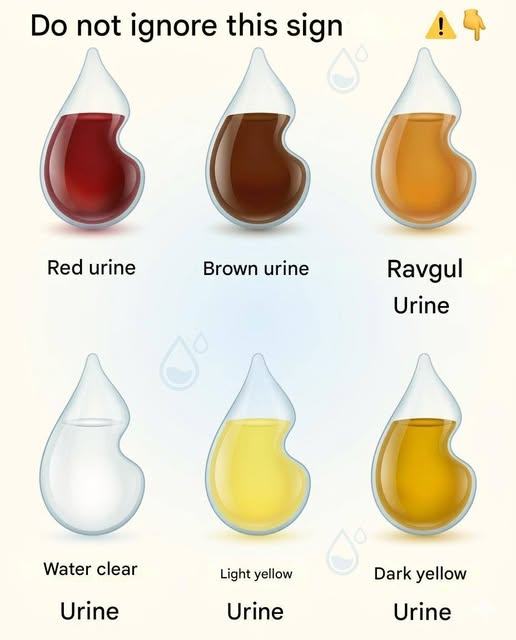
The color of your urine can give useful clues about hydration and sometimes health—but it’s not a diagnostic test by itself. Many factors (food, vitamins, medications) can change it temporarily.
Here’s a clear guide:
💧 What urine color may mean
🟡 Pale yellow (ideal)
- ✔ Normal, healthy hydration
- ✔ Good balance of water in the body
👉 This is usually the “best” target color
💛 Dark yellow / amber
- ⚠️ Often mild dehydration
- Urine is more concentrated
👉 Drink more water
🟠 Orange
Possible causes:
- Dehydration
- Certain medications (e.g., some antibiotics)
- High vitamin B supplements
- Rarely, liver or bile issues
👉 If persistent, worth checking with a doctor
🔴 Pink or red
Possible causes:
- Beets, berries, food dyes
- Blood in urine (hematuria) ⚠️
- Urinary tract infection (UTI)
- Kidney stones
👉 If not food-related, seek medical advice
🟢 Green or blue (rare)
Possible causes:
- Certain medications or dyes
- Food coloring
- Rare bacterial infections
👉 Usually harmless if diet-related, but unusual otherwise
🟤 Dark brown / cola-colored
Possible causes:
- Severe dehydration
- Liver problems (bilirubin in urine) ⚠️
- Muscle breakdown (rare, serious)
- Certain medications
👉 Should be evaluated if not linked to dehydration or diet
⚪ Very clear (transparent)
- ✔ Often means well hydrated
- ⚠️ But consistently too clear may indicate overhydration
👉 Can dilute electrolytes if excessive
🧠 Key takeaway
Urine color mainly reflects:
💧 Hydration level + diet + supplements + medications
It’s a helpful daily indicator—but not a standalone medical test.
🚩 When to see a doctor
- Blood in urine not linked to food
- Persistent dark brown or orange urine
- Pain, burning, or fever
- Strong foul odor lasting days
If you want, I can give you a simple “urine color chart” you can save as a reference guide or explain how hydration affects kidney function in more detail.
