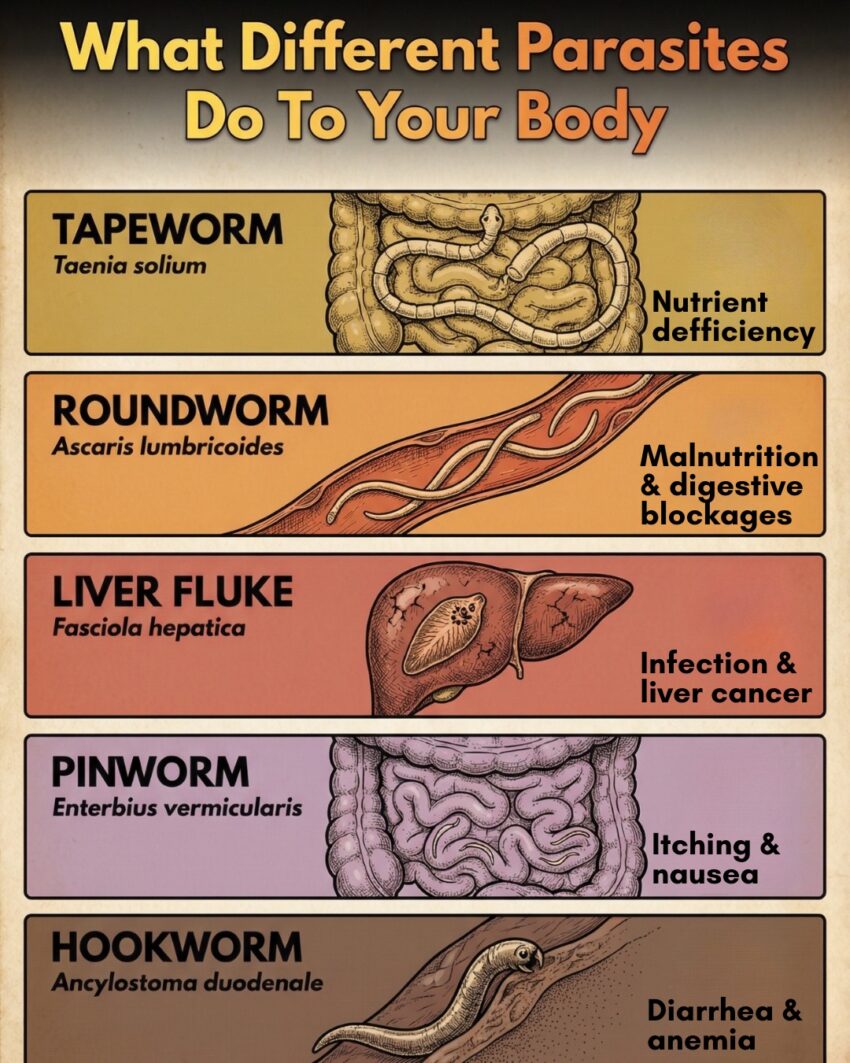
That title is another common fear-based hook, but the real topic—parasites in humans—is legitimate medicine and actually pretty well understood.
Parasites are organisms that live in or on your body and use it for survival. Effects vary a lot depending on the type.
Here’s a clear, realistic breakdown:
🦠 1. Intestinal worms (most common globally)
Examples: roundworm, tapeworm, hookworm
What they do:
- Live in the intestines
- Steal nutrients from food
- Sometimes cause anemia (especially hookworms)
- Can lead to weight loss, fatigue, or stomach discomfort
🧠 2. Tissue and organ parasites
Examples: certain larvae that migrate through tissues
What they do:
- Travel through muscles or organs
- Cause inflammation or pain
- Sometimes fever or allergic reactions
🧬 3. Protozoa (microscopic parasites)
Examples: Giardia, Entamoeba
Giardiasis
What they do:
- Infect the gut
- Cause diarrhea, gas, stomach cramps
- Lead to dehydration if severe
🧫 4. Blood parasites
Examples: malaria parasite
Malaria
What they do:
- Infect red blood cells
- Cause fever, chills, fatigue
- Can be serious or life-threatening without treatment
🪳 5. External parasites
Examples: lice, scabies mites
Scabies
What they do:
- Live on skin surface
- Cause intense itching and rash
- Spread through close contact
⚠️ Important reality check
- Parasites are not as common in everyday healthy environments as online posts suggest
- Severe infections usually happen with:
- contaminated water or food
- poor sanitation
- travel to high-risk areas
💡 Common symptoms (when infection is real)
- Persistent diarrhea or stomach issues
- Unexplained fatigue
- Itching (especially anal or skin)
- Weight loss without reason
- Fever (in some infections)
Bottom line
Parasites can affect the body in different ways, but viral-style posts usually exaggerate or make them sound far more common and dramatic than they are.
If you want, I can tell you:
- how people actually get them in daily life
- or simple ways doctors diagnose and treat them safely
