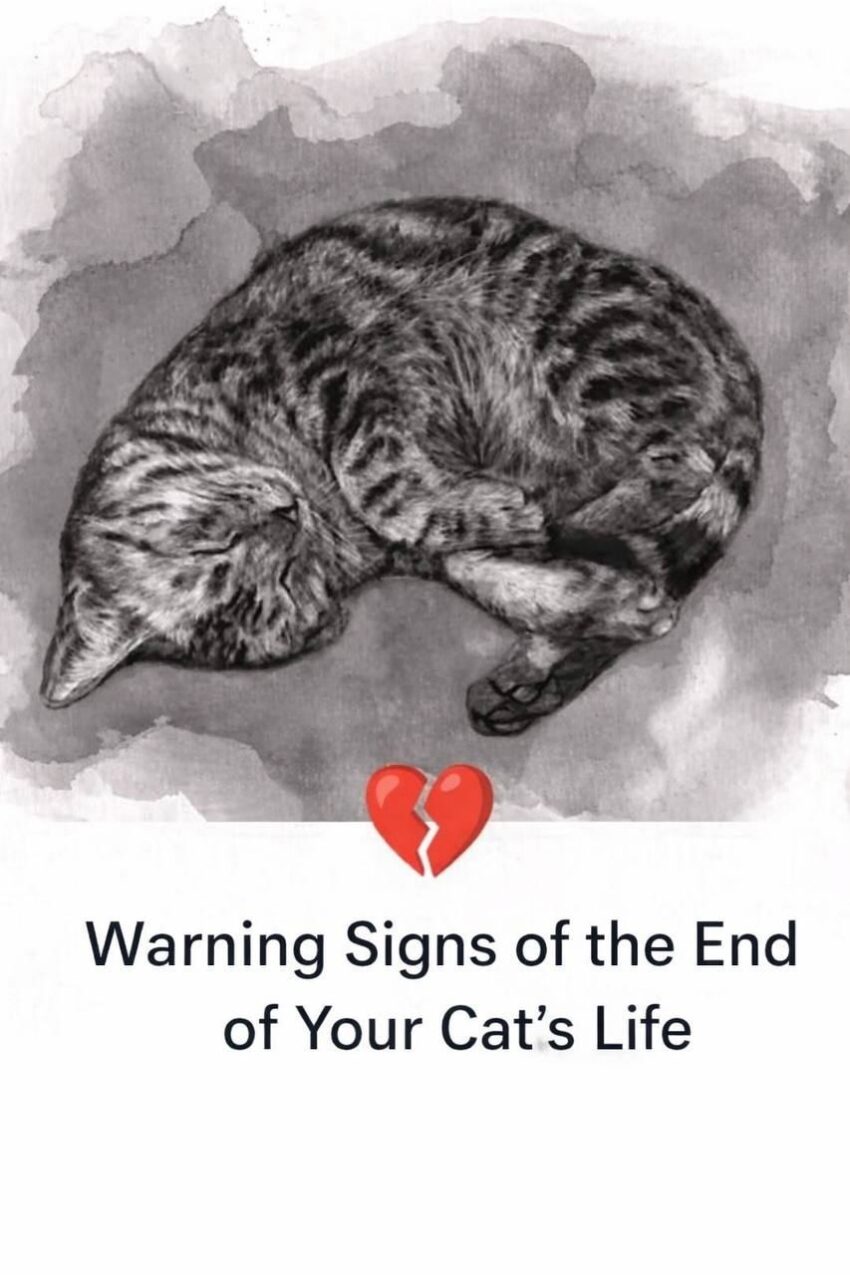
When a cat is nearing the end of life, the signs are often gradual and can vary depending on age and illness. Recognizing them can help you keep your pet comfortable and know when to seek veterinary support.
Here are the most common warning signs in a dying Cat:
1. Loss of appetite and thirst
Your cat may:
- Eat very little or stop eating completely
- Drink less water
- Show no interest even in favorite treats
2. Extreme weakness and low energy
- Sleeping almost all the time
- Difficulty standing, walking, or jumping
- Appearing “dull” or unresponsive
3. Withdrawal and hiding
- Hiding in quiet, dark places
- Avoiding interaction or affection
- Seeking solitude more than usual
4. Changes in breathing
- Slow, shallow, or irregular breathing
- Open-mouth breathing (a serious sign)
- Noticeable effort when breathing
5. Poor grooming and appearance changes
- Fur becomes unkempt or dirty
- Weight loss and visible thinning
- Sunken eyes or dehydrated appearance
6. Loss of bladder or bowel control
- Accidents outside the litter box
- Inability to get up in time to use it
- Weakness leading to soiling while lying down
7. Temperature drop and cold extremities
- Ears, paws, and nose feel cold
- Body feels cooler than normal
8. Behavior changes or confusion
- Disorientation or staring into space
- Restlessness or unusual vocalization
- Less awareness of surroundings
Important note
These signs don’t always mean immediate passing—some can also appear with treatable illness or pain. A veterinarian can help determine whether comfort care, treatment, or end-of-life support is needed.
If you want, tell me your cat’s symptoms and I can help you understand what stage it might be and what you can do to keep them comfortable.
