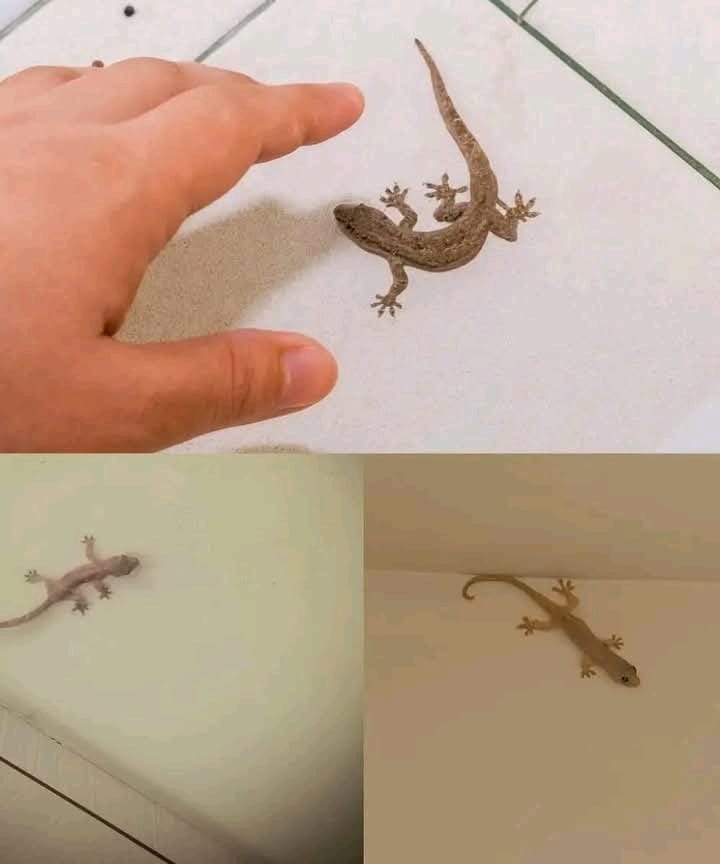
The tropical house gecko is a small lizard commonly found in warm regions and around human homes.
Basic identity
- Scientific name: Hemidactylus frenatus
- Often called: house lizard, wall gecko, or tropical house gecko
Where it lives
- Very common in South Asia (including Pakistan), Southeast Asia, Africa, and tropical regions worldwide
- Lives inside houses, on walls, ceilings, and near lights at night
Why it comes into houses
- Attracted to insects (especially moths and mosquitoes)
- Lights draw insects → geckos follow food
- Warm, sheltered environments help them survive
Behavior
- Mostly nocturnal (active at night)
- Very fast climbers due to sticky toe pads
- Usually harmless and avoids humans
- Makes a soft “clicking” sound at night
Is it dangerous?
- ❌ Not poisonous
- ❌ Not aggressive
- ❌ Does not bite unless handled roughly
- ✔ Helps control insects naturally
So in most homes, it’s actually a beneficial pest controller.
Common myths
- “It’s dirty or poisonous” → ❌ false
- “It spreads disease easily” → ❌ very unlikely in normal conditions
- “It brings bad luck” → ❌ cultural myth, not scientific
If you want to keep them out
- Reduce insects (turn off unnecessary lights at night)
- Seal wall gaps and windows
- Keep food areas clean
Bottom line
The tropical house gecko is a harmless, helpful insect-eating lizard that accidentally becomes a house guest.
If you want, I can tell you how to safely remove them from your room without killing them or how to keep them away naturally.
