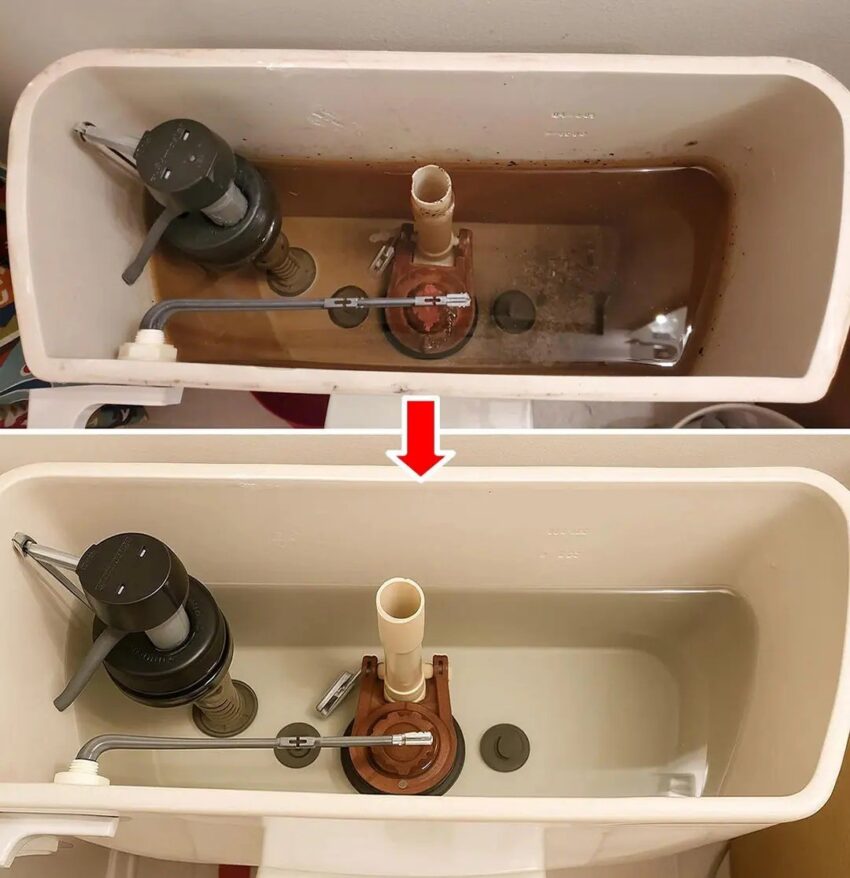
An orange or rusty residue inside a toilet tank is almost always caused by iron. Here is the breakdown of why it happens and how to fix it without scrubbing for hours.
The Culprits: Why is it Orange?
1. High Iron Content (Well Water)
If you are on a well, “clear-water iron” is common. The water looks clear coming out of the tap, but once it sits in the tank and is exposed to air (oxygen), the iron oxidizes and turns into those classic rusty-orange particles.
2. Aging Galvanized Pipes
If you live in an older home, the orange “sludge” in your tank might actually be your pipes disintegrating from the inside out. Tiny flakes of rust travel through the lines and settle in the bottom of the tank.
3. Iron Bacteria
If the orange stuff looks slimy or “fluffy,” you likely have iron bacteria. These are harmless to humans but they feed on iron in the water and create a sticky, orange bio-film that clings to the flapper and fill valve.
How to Clean It (The “No-Scrub” Method)
Do not use chlorine bleach. Bleach can actually oxidize iron further, making the stain darker and more permanent. Instead, use an acid-based cleaner to dissolve the mineral.
-
Shut off the water: Turn the silver valve behind the toilet and flush until the tank is empty.
-
The Acid Treatment: Pour in a citric acid-based cleaner or a dedicated rust remover (like Iron Out or CLR).
-
Let it Sit: Let the solution sit for at least 30–60 minutes (longer for heavy buildup).
-
Scrub & Flush: Give it a quick pass with a nylon brush, turn the water back on, and flush a few times.
Why You Should Care
Beyond aesthetics, orange buildup can cause mechanical issues:
-
Leaky Flapper: Iron scale can prevent the rubber flapper from sealing, causing the toilet to “ghost flush” or run constantly.
-
Slow Fill: Rust particles can clog the tiny screen in your fill valve, making the toilet take forever to refill.
Would you like me to look up the best-rated rust-removing products specifically safe for septic systems or city sewers?
