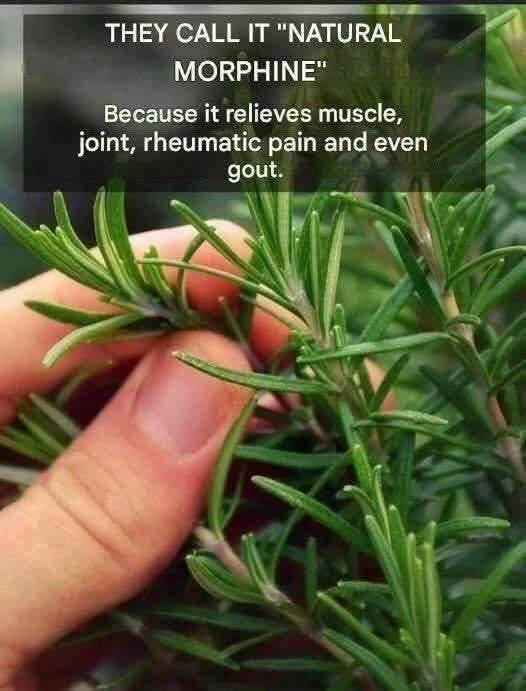
That phrase — “natural morphine” — is usually a marketing or social media claim, not a scientific one.
There is no true natural food or herb that works exactly like morphine (a powerful opioid painkiller). But a few natural substances can reduce inflammation or pain, which is why people use that label loosely.
🌿 What people usually mean by “natural morphine”
1. 🌳 Willow bark
- Contains salicin (converted in the body to something like aspirin)
- Helps with joint, back, and headache pain
- Mild anti-inflammatory effect
2. 🍒 Tart cherry
- Often used for gout and arthritis pain
- Reduces uric acid inflammation
- Common “natural gout remedy” online
3. 🌿 Turmeric (curcumin)
- Strong anti-inflammatory
- Helps with joint and rheumatic pain
- Works slowly, not instant pain relief
4. 🌰 Boswellia (frankincense extract)
- Used in traditional medicine for arthritis
- Reduces swelling and stiffness
5. 🌿 “Wild lettuce” (sometimes called natural opium)
- Mild sedative/pain-relieving effect
- BUT: effects are weak and not comparable to morphine
- Can cause side effects if misused
6. ⚠️ Kratom (important warning)
- Sometimes called a “natural opioid”
- Can act on opioid receptors
- Risk of dependence and addiction
- Not safe as a casual pain remedy
🚨 Important truth
- Morphine = strong opioid drug from medical use
- “Natural morphine” = misleading term
- Natural remedies may help mild pain or inflammation, but they:
- do NOT replace real painkillers in severe pain
- do NOT work instantly like morphine
🧠 Simple summary
People use “natural morphine” to describe herbs like willow bark, turmeric, or cherry extracts, but no natural product matches morphine’s strength or effect.
If you want, tell me where you saw this claim (video, herb, powder, etc.), and I can tell you exactly what it is and whether it’s safe or just hype.
