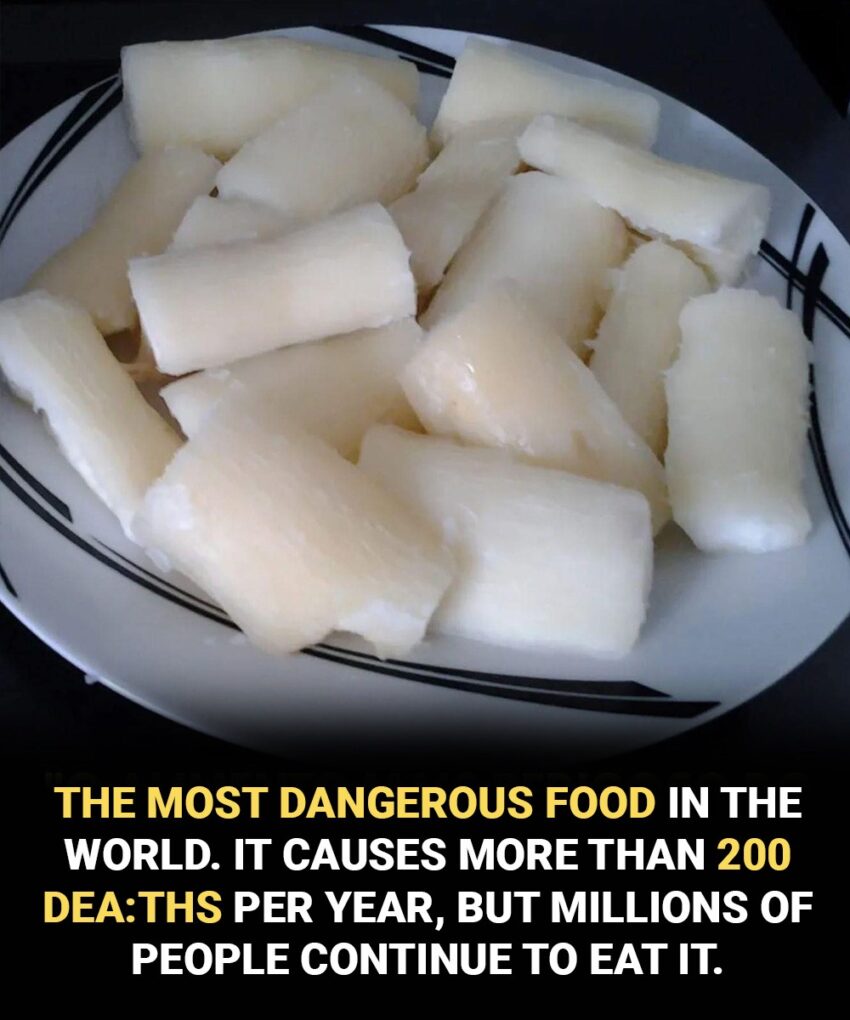
That dramatic description usually refers to Cassava.
⚠️ Why cassava can be dangerous
Cassava naturally contains compounds that can release cyanide if the plant isn’t prepared properly.
If eaten raw or poorly processed, it can cause:
- Cyanide poisoning
- Paralysis (in severe, long-term cases)
- Even death
This is why it’s linked to hundreds of deaths per year, especially in regions where it’s a major staple and food processing may be limited.
🍽️ Why people still eat it
Despite the risk, cassava is eaten by millions worldwide because:
- It’s a major staple food in parts of Africa, South America, and Asia
- It’s rich in carbohydrates (a key energy source)
- It grows well in poor soil and drought conditions
✅ How it’s made safe
When prepared correctly, cassava is perfectly safe:
- Peeling
- Soaking
- Fermenting
- Thorough cooking
These processes remove or reduce the toxic compounds.
🧠 Bottom line
Cassava isn’t “the most dangerous food” in everyday use—it’s only risky when improperly prepared. Proper handling turns it into a safe and essential food for millions.
If you want, I can list other surprisingly dangerous foods (like pufferfish or ackee) and explain what makes them risky.
