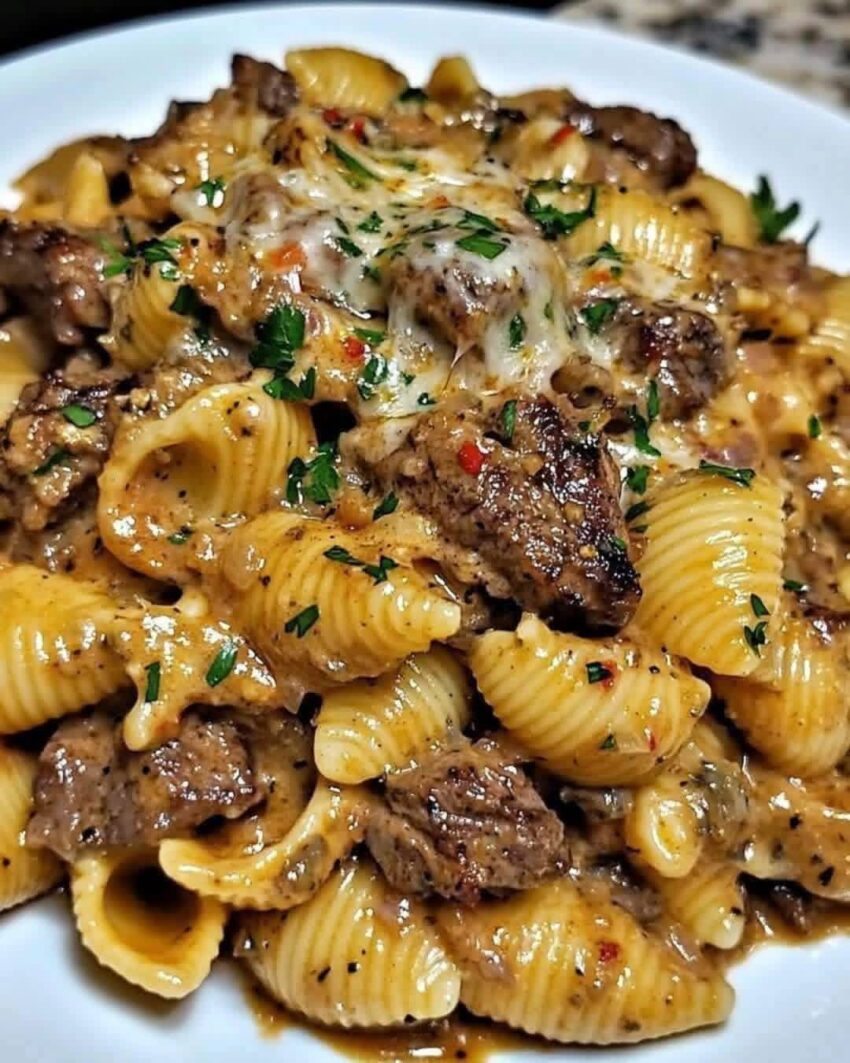
Here’s a detailed and easy recipe for Steak and Cheese Shells Pasta—creamy, cheesy, and full of savory steak flavor:
🥩🧀 Steak and Cheese Shells Pasta
Ingredients (Serves 4)
- Pasta shells – 250–300 g
- Steak (sirloin, ribeye, or tenderloin) – 300 g, thinly sliced
- Olive oil – 2 tbsp
- Butter – 1 tbsp
- Garlic – 2 cloves, minced
- Onion – 1 small, chopped
- Mushrooms – 1 cup, sliced (optional)
- Heavy cream – 1 cup
- Milk – ½ cup
- Cheddar cheese – 1 cup, shredded
- Parmesan cheese – ½ cup, grated
- Paprika – 1 tsp
- Salt & pepper – to taste
- Fresh parsley – for garnish
👩🍳 Instructions
1. Cook the Pasta
- Boil pasta shells in salted water until al dente
- Drain and set aside, reserving ½ cup pasta water
2. Cook the Steak
- Season steak with salt, pepper, and paprika
- Heat olive oil in a skillet over medium-high heat
- Sear steak slices 2–3 minutes per side until browned but tender
- Remove steak and set aside
3. Make the Creamy Sauce
- In the same skillet, add butter and sauté onion until soft
- Add garlic (and mushrooms if using) and cook for 1–2 minutes
- Pour in heavy cream and milk, stir, and simmer until slightly thickened
- Add ½ cup cheddar and ¼ cup Parmesan, stir until melted
4. Combine Pasta and Steak
- Add cooked pasta shells to the sauce
- Toss in steak slices
- Stir gently, adding a splash of reserved pasta water if needed to loosen sauce
5. Bake (Optional)
- Preheat oven to 180°C (350°F)
- Transfer pasta mixture to a baking dish
- Sprinkle remaining cheddar and Parmesan on top
- Bake for 15–20 minutes until bubbly and golden
6. Serve
- Garnish with fresh parsley
- Serve hot with garlic bread or a side salad
🔥 Tips for Best Results
- Use thin steak slices for even cooking
- Smoked paprika or a dash of cayenne adds extra flavor
- For creamier pasta, stir in a little cream cheese or sour cream
🌟 Flavor Profile
- Rich, creamy, and cheesy
- Savory steak flavor
- Slightly smoky and aromatic with paprika and garlic
If you want, I can also give a one-pan, 30-minute version that’s quicker and just as cheesy—minimal cleanup.
