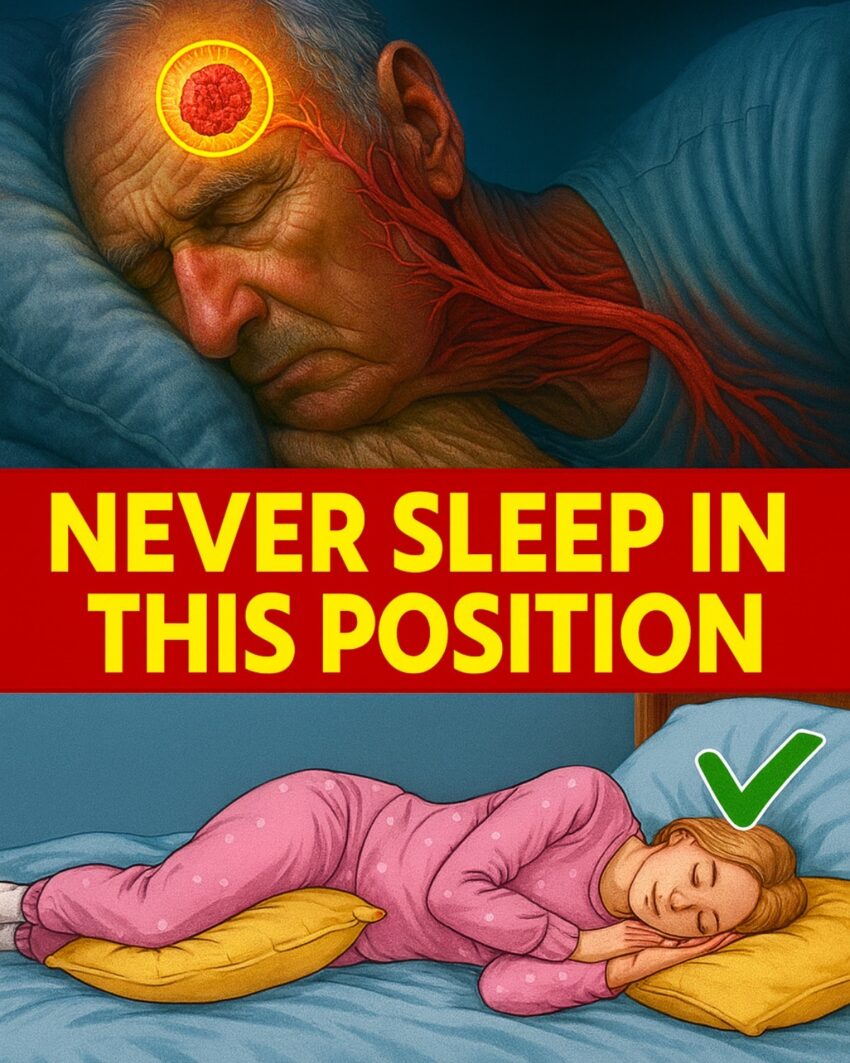
That headline is designed to sound alarming, but the real science is more nuanced. There is no single sleeping position that directly “causes a stroke”. However, some sleep positions and related conditions can contribute to risk factors—especially in seniors who already have issues like high blood pressure, sleep apnea, or heart disease.
Here’s a clear, evidence-based breakdown:
SENIORS: Sleep Positions That May Increase Stroke Risk Factors (What You Should Know)
Stroke risk is mainly influenced by:
- High blood pressure
- Obstructive Sleep Apnea
- Heart disease
- Poor circulation
- Diabetes
- Smoking and lifestyle factors
Sleep position alone is not a direct cause, but it can worsen conditions that increase stroke risk.
1. Sleeping on Your Back (Supine Position) — Risky for Sleep Apnea
Sleeping flat on your back can make breathing more difficult for some seniors.
Why it matters:
- Can worsen airway blockage in sleep apnea
- Leads to snoring and breathing pauses
- Reduces oxygen levels during sleep
Low oxygen over time can strain the heart and blood vessels, increasing long-term cardiovascular stress.
👉 This is why doctors often advise side sleeping for people with sleep apnea.
2. Sleeping with Poor Neck Support — Blood Flow Issues
If your pillow is too high or too low, it can strain the neck.
Possible effects:
- Reduced comfort and disrupted sleep
- Muscle tension in the neck
- Potential temporary blood flow restriction in sensitive individuals
While it does not directly cause stroke, poor sleep posture can worsen circulation and sleep quality, which are important for heart health.
3. Sleeping Face Down — Not Ideal for Older Adults
Stomach sleeping is generally discouraged for seniors.
Why:
- Neck is twisted for long periods
- Breathing may be restricted
- Can cause spinal and vascular strain
This position can contribute to discomfort and poor oxygen intake in some individuals.
Best Sleep Position for Seniors (Recommended by Experts)
Most sleep specialists recommend:
✔ Side sleeping (especially left side)
Benefits:
- Improves breathing
- Reduces snoring
- Supports heart circulation
- May help digestion
This is often considered the safest position for seniors with heart or breathing concerns.
Important Reality Check
Sleep position is only a small piece of the stroke risk puzzle. The real risk factors include:
- Uncontrolled blood pressure
- Smoking
- Diabetes
- High cholesterol
- Lack of physical activity
- Untreated sleep apnea
If someone is concerned about stroke risk, focusing on these areas is far more important than sleep position alone.
When to See a Doctor
Seniors should seek medical advice if they experience:
- Loud snoring with pauses in breathing
- Morning headaches
- Excessive daytime sleepiness
- High blood pressure that is hard to control
Source Note
This explanation is based on general sleep medicine and cardiovascular health guidelines related to sleep posture, obstructive sleep apnea, and stroke risk factors commonly referenced in clinical health education and public medical resources.
If you want, I can turn this into:
- a viral Facebook warning post (SEO + engagement style),
- a YouTube script (“Doctor explains truth” format),
- or a myth vs fact breakdown article.
