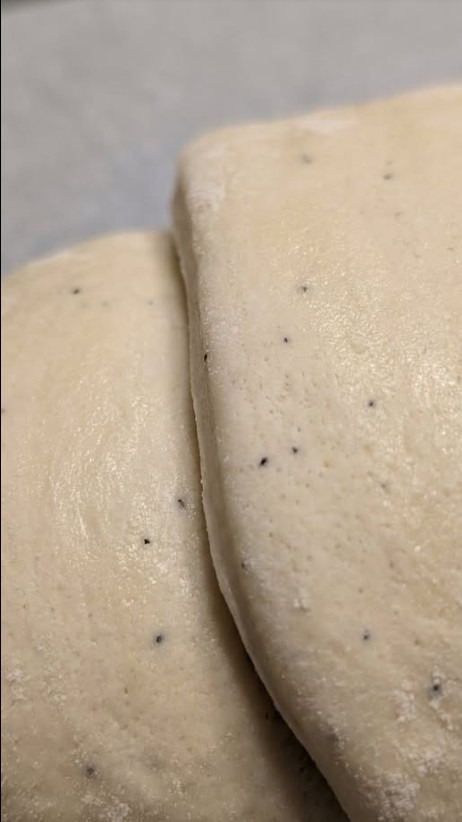
Puff pastry is a light, flaky, and buttery pastry made by layering dough and butter, then folding and rolling it repeatedly to create thin layers that “puff” when baked. It’s widely used in both sweet and savory dishes.
Characteristics
- Texture: Crisp, airy, and flaky
- Appearance: Golden brown when baked
- Flavor: Buttery, slightly neutral, versatile for many fillings
- Forms: Sheets, rounds, or pre-cut shapes, often frozen for convenience
How It Works
Puff pastry rises due to steam generated from the layers of butter and dough during baking. No chemical leavening (like yeast or baking powder) is required.
Common Uses
- Savory:
- Sausage rolls
- Cheese straws
- Chicken or vegetable pies
- Tarts and quiches
- Sweet:
- Fruit tarts and turnovers
- Napoleons / mille-feuille
- Palmiers and danishes
- Creative applications:
- Wrapping meat or fish for “en croute” dishes
- Mini appetizers or finger foods
Tips
- Keep it cold: Puff pastry works best when the butter stays cold; thaw in the fridge if frozen
- Don’t overwork the dough: Handling too much can cause butter to melt and layers to fuse
- Egg wash: Brushing with beaten egg before baking gives a shiny, golden finish
- Freezing: Puff pastry freezes well; bake straight from frozen if needed
Fun fact: Traditional puff pastry can take hours to make by hand due to the folding (lamination) process, but store-bought sheets allow you to create professional-looking pastries in minutes.
I can also give a list of easy puff pastry recipes for quick appetizers or desserts if you want.
Do you want me to do that?
