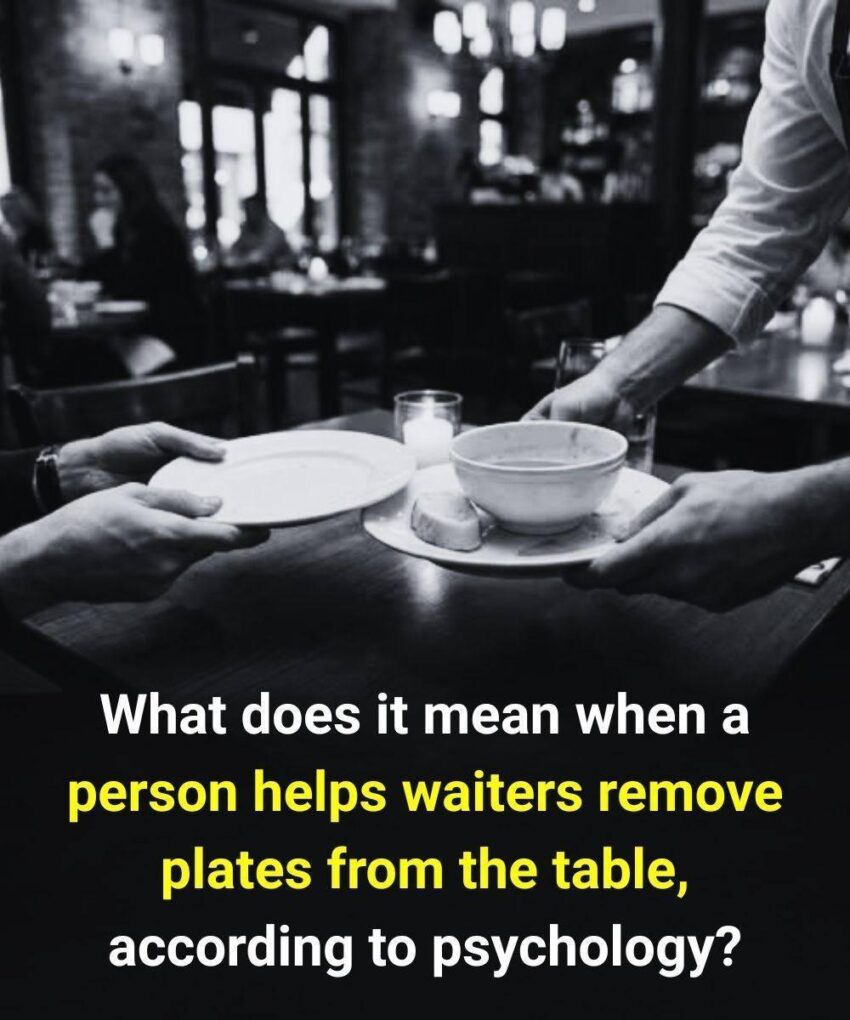
The psychology of helping waiters clear tables is fascinating because it taps into social norms, empathy, and subtle behavioral cues. Here’s a detailed breakdown:
1. Social Norms and Reciprocity
Humans are wired to follow social norms, which often include helping others in communal settings. In a restaurant:
- Reciprocity principle: If a diner receives good service, they may feel an obligation to “return the favor” by helping a waiter, even if it’s a small gesture like clearing an empty plate.
- Norm of helpfulness: In cultures where communal cooperation is valued, people are more likely to step in spontaneously to help.
2. Empathy and Perspective-Taking
Seeing a waiter carry multiple dishes or struggle with a crowded tray can trigger empathetic responses:
- Emotional contagion: Observing stress or effort can lead customers to feel a micro-version of that stress, motivating them to act.
- Perspective-taking: Imagining themselves in the waiter’s position can activate prosocial behavior.
3. Public Image and Impression Management
Helping a waiter can serve as a subtle way to signal kindness or competence to others in the restaurant:
- Self-presentation: People often act prosocially when they are observed because it reflects positively on them.
- Cultural signaling: In some cultures, helping staff is a status signal, showing humility or attentiveness to social etiquette.
4. Situational Cues and Triggers
Certain environmental factors make helping more likely:
- Cluttered tables: The more obvious the need, the more likely a person is to act.
- Waiter’s gestures: Polite, non-intrusive cues like a nod or smile can invite help.
- Social proof: Seeing others help increases the likelihood of participation, due to conformity pressures.
5. Small Acts, Big Psychological Rewards
Even minimal assistance triggers positive reinforcement for the helper:
- Mood boost: Doing a kind act releases dopamine and fosters a sense of satisfaction.
- Perceived agency: People feel they made a difference in someone else’s day, reinforcing the behavior.
6. Potential Barriers
Not everyone helps, even when the opportunity is clear:
- Diffusion of responsibility: In crowded restaurants, diners may assume someone else will help.
- Social ambiguity: If it’s unclear whether help is welcome, people hesitate.
- Cultural norms: Some patrons may see clearing tables as exclusively the staff’s job.
In short, helping waiters is influenced by a mix of empathy, social norms, situational cues, and personal rewards. Even small gestures can reinforce a culture of prosocial behavior, making the dining experience smoother and more pleasant for everyone.
If you want, I can also explain why some diners actively avoid helping, which is the flip side of this psychology.
Do you want me to cover that too?
