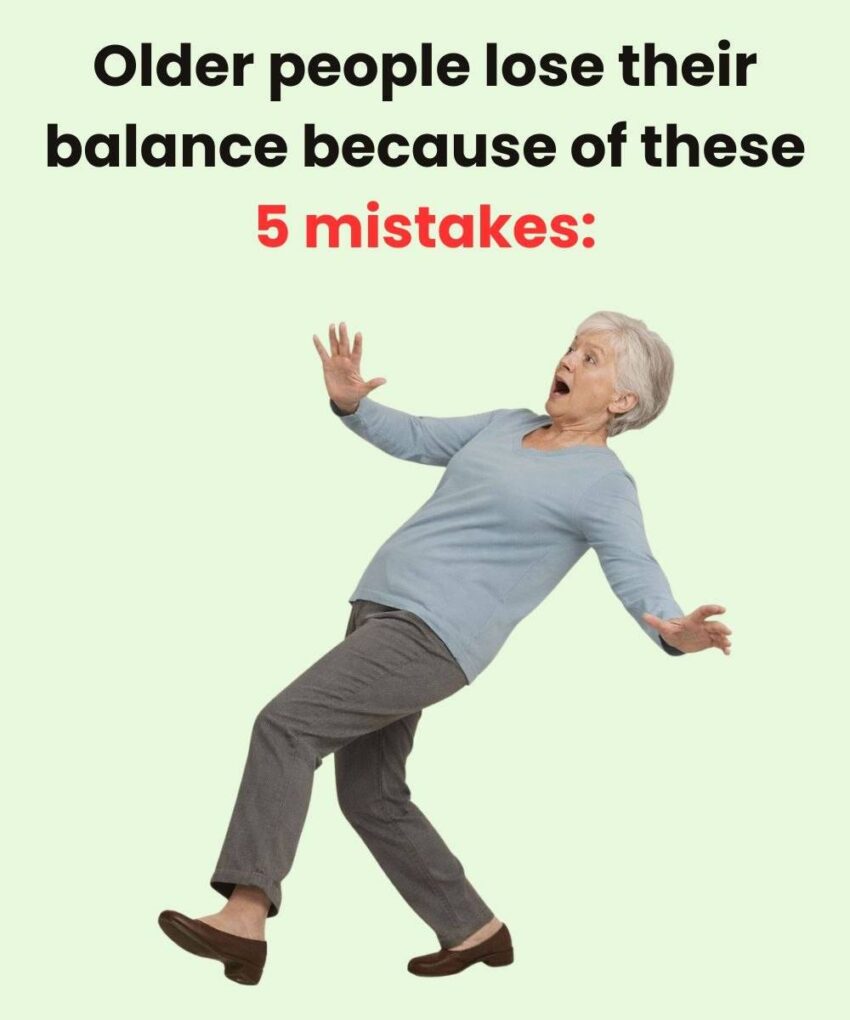
That headline is another over-simplified “fear + blame” list. Balance problems in older adults are real—but they are rarely caused by just “5 mistakes.” They usually come from a mix of medical, neurological, and lifestyle factors.
🧠 What actually causes balance problems in older people
1. Muscle weakness and low activity
- Loss of leg strength (sarcopenia)
- Reduced physical activity over time
✔ This is one of the most common causes
2. Inner ear (vestibular) changes
Benign Paroxysmal Positional Vertigo (BPPV)
- Tiny crystals in the inner ear shift
- Causes dizziness when turning the head or standing up
3. Low blood pressure on standing
Orthostatic Hypotension
- Blood pressure drops when standing suddenly
- Can cause dizziness or fainting
4. Vision changes
- Cataracts
- Poor depth perception
- Reduced night vision
Balance depends heavily on vision.
5. Nerve problems (neuropathy)
- Often due to diabetes or vitamin deficiencies
- Reduced sensation in feet makes walking unstable
⚠️ What viral posts usually claim as “5 mistakes”
They often blame things like:
- Wearing the wrong shoes
- Sleeping position
- Drinking water timing
- “Not walking barefoot”
- “Looking down too much”
These are minor factors at best, not real root causes.
🧭 What actually helps improve balance
- Strength training (especially legs and core)
- Walking regularly
- Vision and hearing checks
- Reviewing medications with a doctor
- Balance exercises (like standing on one foot or tai chi)
✔️ Bottom line
Balance problems in older adults are medical and physical issues—not just a list of “mistakes.”
If you want, I can give you a simple daily 5-minute balance routine that doctors actually recommend for seniors to prevent falls.
