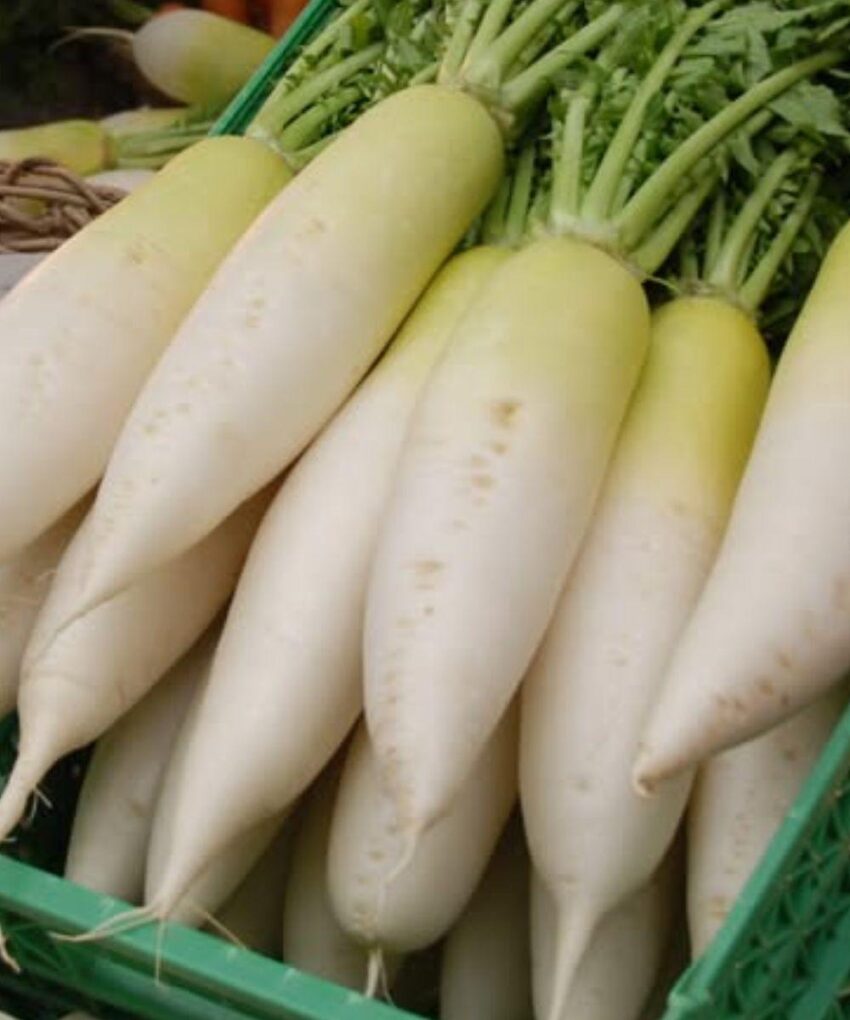
Ah, you’re asking about Korean radish, a staple in Korean cuisine. Here’s a detailed breakdown:
🌿 Overview of Korean Radish
- Scientific Name: Raphanus sativus var. longipinnatus
- Common Names: Mu (무) in Korean, Korean white radish, Oriental radish
- Origin: East Asia, widely cultivated in Korea
- Type: Root vegetable
🥗 Characteristics
- Shape & Size:
- Thick, cylindrical root, usually white with a slight greenish tint near the top.
- Typically 20–35 cm long and 5–8 cm in diameter.
- Texture & Flavor:
- Crisp, dense, and juicy flesh.
- Mildly sweet and peppery compared to Western radishes.
- Leaves:
- Dark green, edible, often used in soups or kimchi.
🍴 Culinary Uses
- Kimchi: Essential for making kkakdugi (cubed radish kimchi) and dongchimi (water kimchi).
- Soups & Stews: Adds sweetness and texture to broths like galbitang or mu guk.
- Pickles: Sliced and salted for pickling, often served as banchan (side dish).
- Raw: Can be eaten thinly sliced or shredded in salads.
🌱 Growing & Care
- Climate: Cool-season crop, grows best in spring or fall.
- Soil: Well-drained, fertile soil with good moisture retention.
- Spacing: 10–15 cm between roots; 30–40 cm between rows.
- Harvest: Usually 60–70 days after sowing. Harvest before the root becomes too woody.
⚠️ Health & Nutrition
- Low in calories, high in vitamin C, fiber, and antioxidants.
- Traditionally used in Korean medicine to aid digestion and detoxification.
- Mildly diuretic and helps relieve bloating.
If you want, I can also give a comparison between Korean radish and regular Western radishes, including which is better for soups, kimchi, or raw eating. This helps clarify why Korean radish is preferred in certain recipes.
Do you want me to make that comparison?
