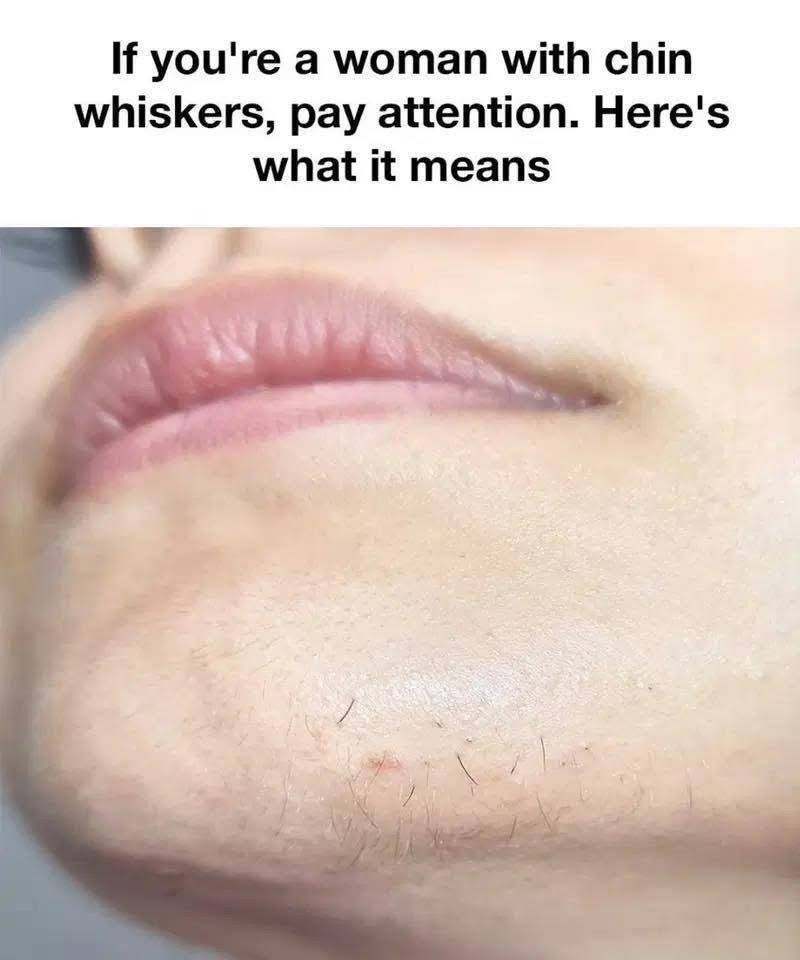
That kind of headline is usually clickbait. Chin whiskers in women are very common, and in most cases they are harmless and related to normal hormone variation—not a hidden warning sign.
Here’s what it can actually mean:
🧠 Why women get chin whiskers
🟢 1. Normal hormonal variation (most common)
Women naturally produce small amounts of androgens (male hormones), which can stimulate facial hair.
This can increase with:
- Age
- Genetics (family history)
- Ethnic background
👉 A few chin hairs can be completely normal.
🟡 2. Aging and menopause
As estrogen levels decline:
- Relative androgen effect becomes stronger
- Coarser chin or upper lip hairs may appear
👉 This is very common after 40–50.
🟡 3. Polycystic ovary syndrome (PCOS)
In some cases, excess hair growth (hirsutism) can be linked to PCOS.
Possible signs include:
- Irregular periods
- Acne
- Weight changes
- Thicker facial or body hair
👉 Not all chin hair means PCOS—but it’s one possible cause if other symptoms are present.
🟠 4. Medication or hormone changes
Certain medications or hormonal shifts can increase hair growth:
- Steroids
- Hormone therapies
- Some fertility treatments
🟡 5. Idiopathic hirsutism
Sometimes:
- Hormone levels are normal
- But hair follicles are more sensitive to androgens
👉 This is benign and common.
🚫 What it does NOT usually mean
- ❌ Serious illness on its own
- ❌ “Toxic buildup” or detox issues
- ❌ Immediate health danger
⚖️ When to check with a doctor
Consider medical advice if chin hair is:
- Sudden or rapidly increasing
- Combined with acne, irregular periods, or hair thinning on scalp
- Very coarse and widespread
🧠 Bottom line
Chin whiskers in women usually mean:
normal hormones, genetics, or age-related changes—not something dangerous.
If you want, I can explain how to safely reduce or manage facial hair (natural methods + medical options) depending on what you prefer.
