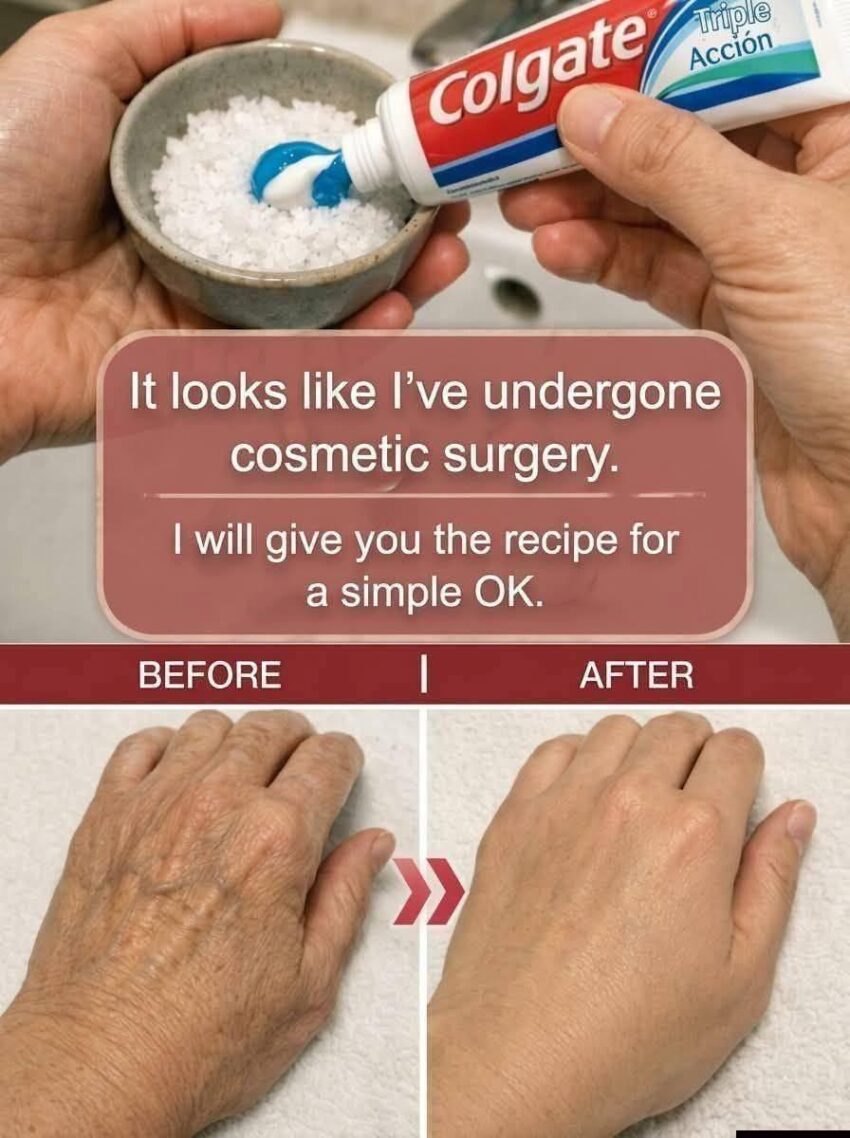
The idea that toothpaste can “improve age spots and wrinkles naturally” is mostly a viral home remedy myth, not a medically supported skincare method.
Why people believe it works
Toothpaste can feel like it “does something” because:
- It contains drying agents (like baking soda or alcohol in some formulas)
- It may temporarily tighten or irritate the skin, which can look like a slight smoothing effect
- Menthol gives a cooling sensation that feels like “refreshing”
But that’s not actual skin repair.
What toothpaste actually does to skin
Dentifrice is designed for teeth, not facial skin. On skin it can:
- Strip natural oils
- Cause redness or irritation
- Trigger chemical burns in sensitive skin
- Worsen pigmentation in some cases (post-inflammatory dark spots)
So instead of improving age spots or wrinkles, it can sometimes make skin texture and tone worse over time.
Why age spots and wrinkles happen (real causes)
- Age spots: sun exposure → excess melanin buildup over time
- Wrinkles: collagen loss + UV damage + natural aging
These are structural skin changes, not surface issues that toothpaste can fix.
What actually works (evidence-based)
If the goal is smoother skin and lighter pigmentation, dermatology-supported options include:
- Sunscreen (SPF 30+) → prevents worsening of spots and wrinkles
- Retinoids (vitamin A derivatives) → boost collagen and cell turnover
- Vitamin C serums → help brighten pigmentation
- Niacinamide → improves uneven tone
- Chemical exfoliants (AHA/BHA) → gradually smooth texture
For stronger results, dermatologists may use:
- laser treatments
- chemical peels
- microneedling
Bottom line
Toothpaste is not a safe or effective treatment for age spots or wrinkles. It may give a temporary “tight” feeling, but that comes from irritation, not skin improvement.
If you want, I can suggest a simple, low-cost skincare routine that actually targets age spots and wrinkles safely.
