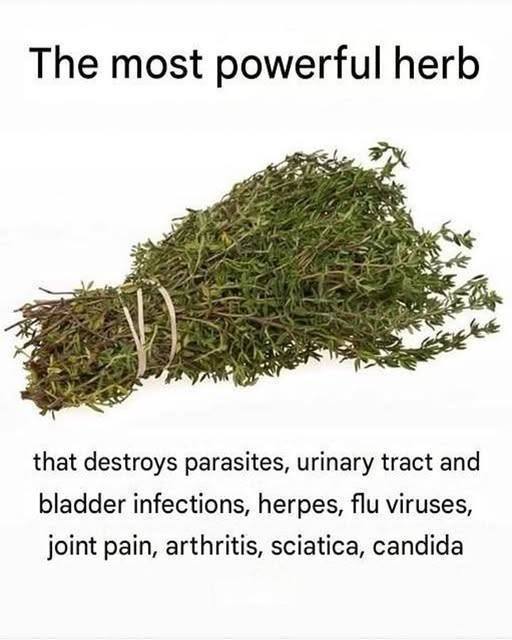
Here’s a clear guide to Garden Thyme—the popular herb for cooking and gardening 🌿
1. What is Garden Thyme?
- Scientific name: Thymus vulgaris
- Also called common thyme or English thyme.
- A perennial herb with small green leaves and tiny flowers, used for flavoring foods and as an ornamental plant.
2. Growing Garden Thyme 🌱
- Light: Full sun (6–8 hours/day)
- Soil: Well-drained, slightly sandy soil
- Watering: Low; drought-tolerant once established
- Spacing: 12–24 inches apart for healthy growth
- Harvest: Snip leaves as needed; best before the plant flowers
3. Culinary Uses 🍽️
- Adds a warm, earthy, slightly minty flavor to dishes.
- Commonly used in:
- Roasted meats (chicken, beef, lamb)
- Soups and stews
- Vegetable dishes and sauces
- Herb blends like Herbes de Provence
Tip: Fresh thyme leaves can be pulled from the stems; dried thyme is stronger, so use about ½ the amount compared to fresh.
4. Medicinal & Aromatic Uses 🌿
- Traditionally used for digestion, coughs, and mild antiseptic purposes.
- Can be added to herbal teas or infused oils.
5. Companion Planting 🌼
- Thyme is great for pollinator-friendly gardens.
- Repels cabbage worms and other pests, making it a good companion for cabbage, tomatoes, and eggplants.
✅ Extra Tip:
- For year-round supply, grow thyme in a pot indoors near a sunny window.
- Dry sprigs by hanging upside down for long-term storage.
If you want, I can also make a quick guide showing 3 easy ways to use garden thyme in everyday cooking, so you can get the best flavor out of it.
Do you want me to make that guide?
