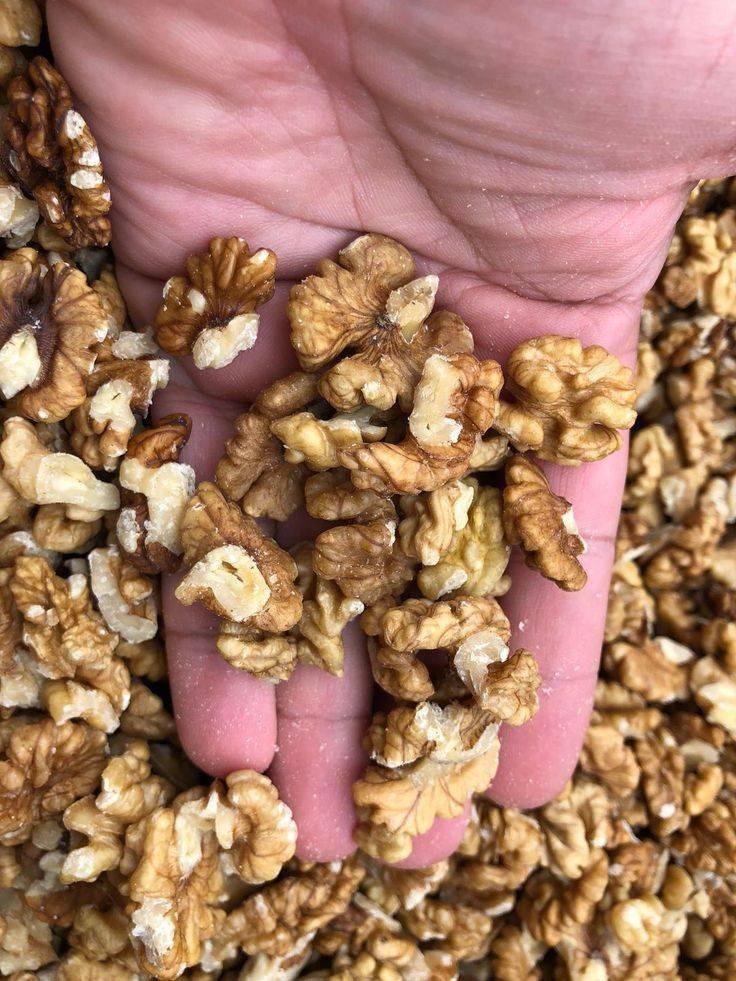
Here’s a detailed overview of the English walnut:
English Walnut Overview
English walnuts (scientifically Juglans regia) are one of the most commonly consumed walnut varieties worldwide. They are valued for their mild, buttery flavor and nutritional benefits.
- Other Names: Persian walnut, common walnut
- Origin: Native to Persia (modern-day Iran) but now widely cultivated in the U.S., Europe, and China
- Size & Shape: Medium-to-large, round to oval, with a wrinkled shell and a light brown kernel
- Flavor: Mild, slightly sweet, buttery
Nutritional Benefits (per 1 oz / 28 g)
- Calories: ~185
- Protein: 4 g
- Fat: 18 g (mostly healthy unsaturated fats)
- Carbohydrates: 4 g
- Fiber: 2 g
- Rich in omega-3 fatty acids, antioxidants, vitamin E, magnesium, and phosphorus
Uses
- Culinary Uses
- Eaten raw as a snack
- Added to baked goods: cakes, muffins, cookies, and breads
- Used in salads, oatmeal, granola, or yogurt
- Incorporated into savory dishes like pesto or roasted vegetables
- Oil Extraction
- Walnut oil is used for dressings and cooking due to its nutty flavor
- Decorative or Garnishing
- Chopped or halved for topping desserts or dishes
Storage Tips
- Store in an airtight container to prevent rancidity
- Keep in the refrigerator or freezer for long-term storage (up to a year)
- Room temperature storage is fine for a few weeks, but avoid heat and light
💡 Fun Fact:
- English walnuts are softer and milder than black walnuts, making them the preferred walnut for most cooking and baking.
- They’re often sold shelled or unshelled and can be toasted lightly to enhance flavor.
If you want, I can also give a list of the best ways to use English walnuts in cooking and baking, including desserts, salads, and savory dishes.
Do you want me to do that?
