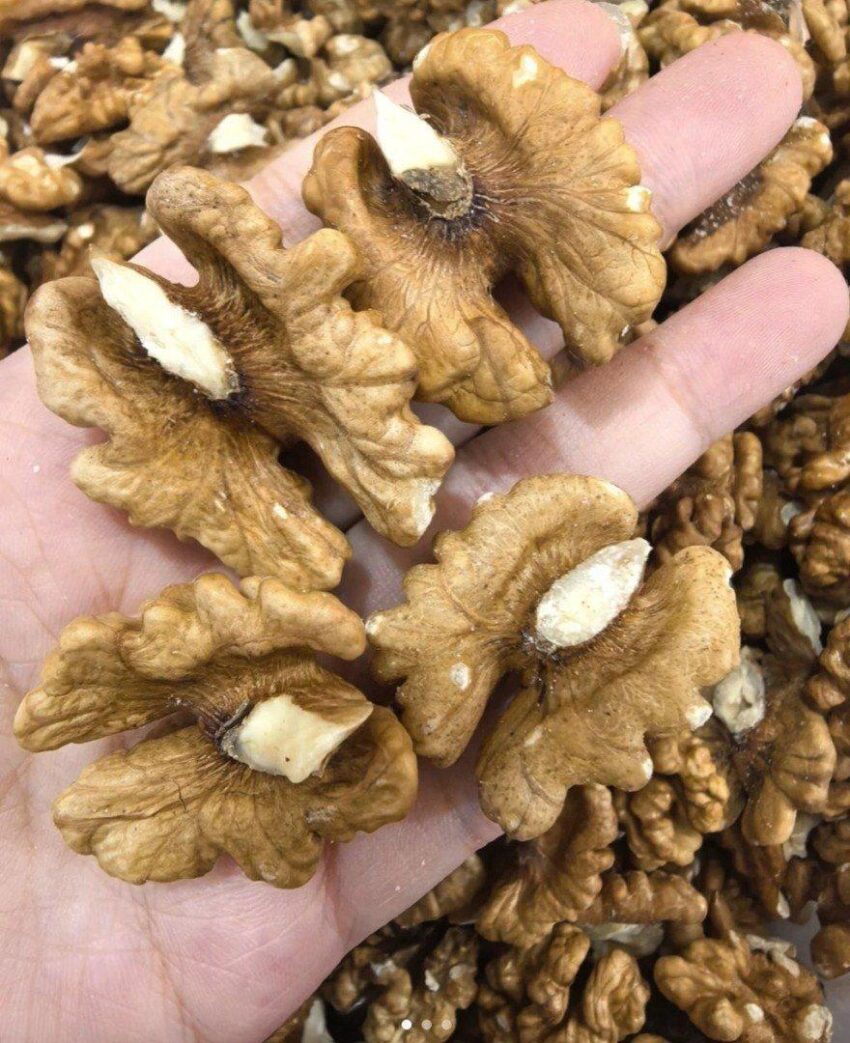
Here’s a detailed overview of the English walnut, a popular nut known for its flavor, nutrition, and culinary versatility:
What It Is
- Comes from the walnut tree (Juglans regia), often called the Persian or English walnut.
- Native to Central Asia, but widely cultivated in the United States (California), Europe, and Asia.
- Typically sold shelled or unshelled, with a wrinkled, brain-like appearance inside a hard shell.
Nutritional Value (per 1 oz / 28 g)
- Calories: ~185
- Protein: 4 g
- Fat: 18 g (mostly healthy polyunsaturated fats, including omega-3 ALA)
- Carbohydrates: 4 g
- Fiber: 2 g
- Vitamins: Vitamin E, B6
- Minerals: Magnesium, phosphorus, copper, manganese
Health Benefits
- Heart health: Omega-3 fatty acids and antioxidants support cardiovascular function.
- Brain health: Rich in nutrients that may support cognitive function.
- Anti-inflammatory: Polyphenols and healthy fats help reduce inflammation.
- Bone health: Contains magnesium, phosphorus, and calcium for strong bones.
- Weight management: High satiety due to protein, fiber, and healthy fats.
Culinary Uses
- Raw or roasted as a snack.
- Added to baked goods: muffins, cakes, breads, and cookies.
- Salads: Adds crunch and flavor.
- Savory dishes: Pesto, grain bowls, or vegetable sautés.
- Nut butter: Can be ground into walnut butter.
Storage Tips
- Store unshelled walnuts in a cool, dry place; last several months.
- Shelled walnuts: best in airtight containers in the fridge (up to 6 months) or freezer (up to a year) to prevent rancidity.
- Avoid exposure to light and heat; walnuts are prone to oxidation.
If you want, I can also give a simple recipe using English walnuts, like a walnut-crusted chicken or dessert that really highlights their flavor.
Do you want me to do that?
