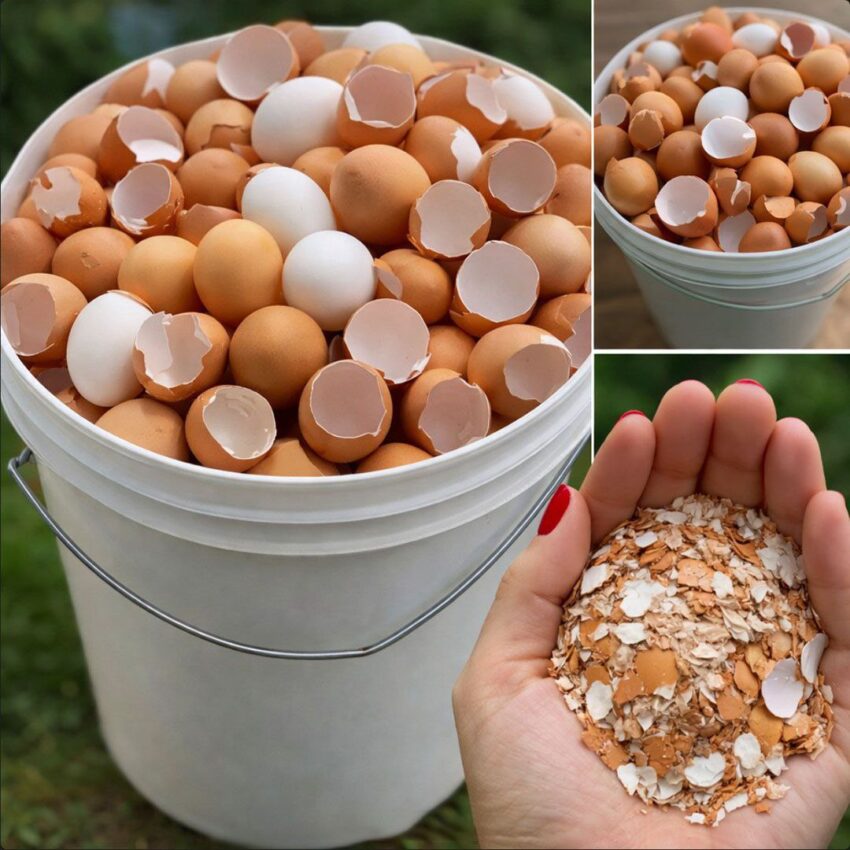
Eggshells are more than just kitchen waste—they’re full of nutrients and have several practical uses around the home and garden. Here’s a detailed look at what they are, their benefits, and how you can use them:
1. Nutritional Value
- Eggshells are mostly calcium carbonate (about 95%), which is essential for strong bones and teeth.
- They also contain small amounts of magnesium, phosphorus, and trace minerals.
- When properly prepared (cleaned and ground into a fine powder), eggshells can be consumed as a dietary calcium supplement.
2. Ways to Use Eggshells
In the Garden
- Fertilizer – Crush eggshells and sprinkle them into the soil to enrich calcium content for plants like tomatoes, peppers, and leafy greens.
- Pest deterrent – Crushed eggshells around plants can help repel slugs and snails.
- Composting – Adds minerals to your compost pile.
In the Kitchen
- Seed starters – Half eggshells can serve as small biodegradable pots for seedlings.
- Cleaning scrub – Finely ground eggshells can gently scrub pots and pans.
Health & Personal Care
- Calcium supplement – Clean, baked, and ground eggshell powder can be added to smoothies or yogurt for extra calcium.
- Face mask – Some DIY recipes mix finely ground eggshell powder with egg whites for a skin-tightening mask.
Other Uses
- Crafts – Eggshells can be dyed or used in mosaics.
- Bird feed – Crushed eggshells provide calcium to backyard birds.
3. How to Prepare Eggshells for Consumption
- Clean – Rinse thoroughly to remove any egg residue.
- Bake – Bake at 200°F (95°C) for 10–15 minutes to kill bacteria.
- Grind – Use a coffee grinder or mortar and pestle to make a fine powder.
- Store – Keep in an airtight container.
Tip: Start with small amounts (about ½ teaspoon) to ensure it agrees with your digestion.
If you want, I can give you a step-by-step DIY eggshell powder guide with exact measurements that’s safe and easy to consume daily. It’s surprisingly simple! Do you want me to do that?
