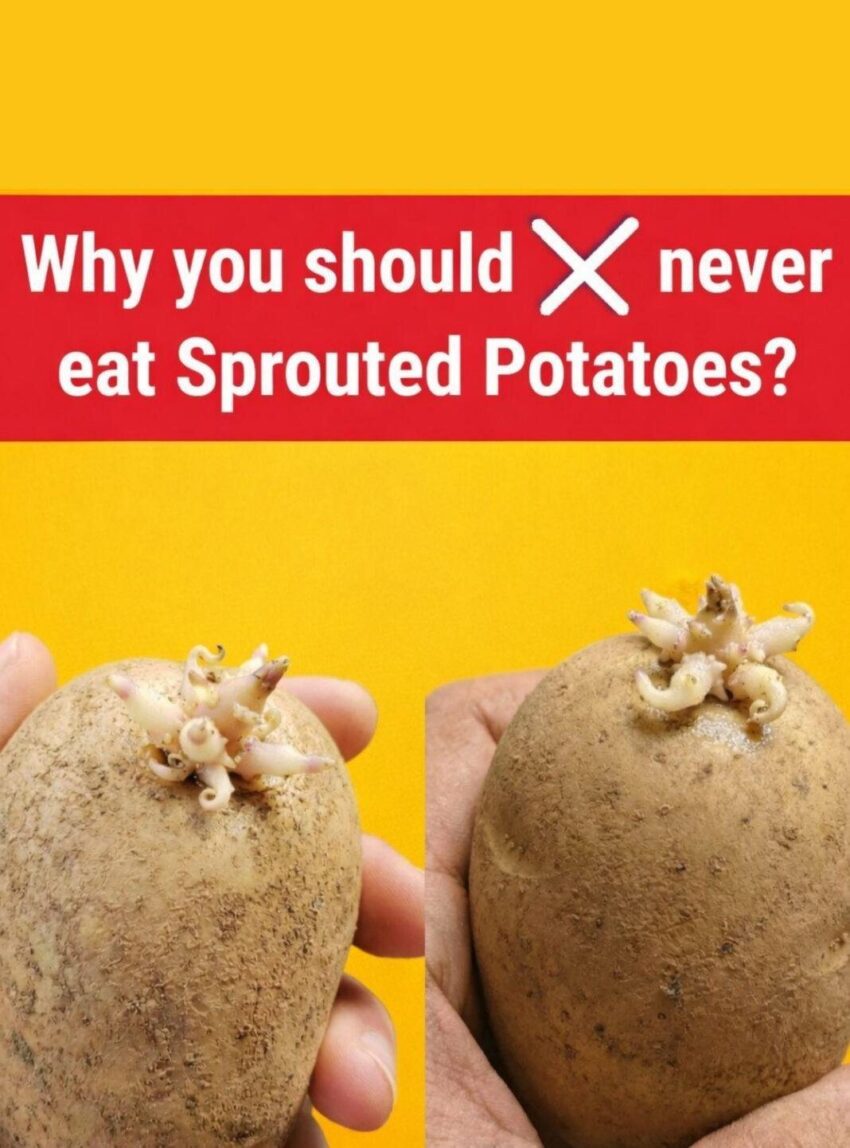
Eating sprouted potatoes is a common question, and the key issue is safety—because sprouting can increase natural toxins in the potato.
Let’s break it down clearly.
🥔 Are sprouted potatoes safe to eat?
🟡 Sometimes YES — but only if properly handled
Sprouts themselves are not always dangerous, but they are a warning sign that the potato is changing chemically.
⚠️ The real concern: glycoalkaloids
When potatoes sprout or turn green, they can produce higher levels of natural toxins called:
- Solanine
- Chaconine
These are part of the potato’s defense system.
👉 In high amounts, they can cause food poisoning symptoms.
🚨 Symptoms of eating too much toxin
- Nausea
- Vomiting
- Diarrhea
- Stomach pain
- Headache or dizziness (in severe cases)
🟢 When sprouted potatoes are still OK
You can sometimes still use them if:
- Sprouts are small and removed completely
- Potato is still firm (not soft or shriveled)
- No green coloring under the skin
👉 Peel deeply and remove all sprouts and “eyes”
🔴 When you should throw them away
Do NOT eat if:
- Potato is soft, wrinkled, or shriveled
- Large or multiple sprouts are present
- Green patches are visible under skin
- Bitter taste after cooking (warning sign of toxins)
🧠 Why sprouting happens
- Exposure to light or warmth
- Long storage time
- Natural aging of the potato
👉 Sprouting = the potato is no longer at peak quality
🧑🍳 Safe handling tips
- Store potatoes in a cool, dark place
- Avoid storing near onions
- Buy smaller quantities to reduce aging
- Remove sprouts early if they appear
🧠 Bottom line
Small sprouted potatoes can be safe if properly peeled and cleaned, but heavily sprouted or green potatoes should be discarded due to increased natural toxins.
If you want, I can also explain:
- 🥔 how to store potatoes so they never sprout quickly
- 🍟 or which potato types are safest for cooking and frying 👍
