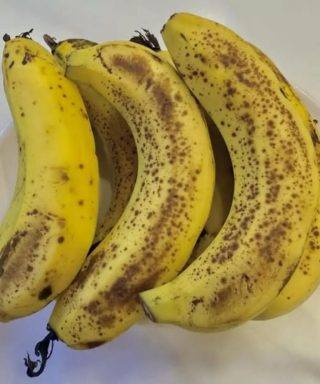
Here’s a detailed overview of the Cavendish banana, the most widely recognized type of banana worldwide:
🍌 Overview of Cavendish Banana
- Scientific Name: Musa acuminata (Cavendish subgroup)
- Common Names: Cavendish banana, supermarket banana
- Origin: Originally from Southeast Asia; named after William Cavendish, 6th Duke of Devonshire, who cultivated it in England in the 19th century.
- Usage: Primarily eaten raw, used in desserts, smoothies, and baking.
🥝 Characteristics
- Appearance:
- Long, slightly curved fruit with smooth yellow skin when ripe.
- Green when unripe, turns yellow as it matures, sometimes with small brown spots.
- Texture & Flavor:
- Soft, creamy, and sweet flesh.
- Mild flavor, making it versatile for both eating raw and cooking.
- Size:
- Typically 15–25 cm long, slender compared to some other banana varieties.
🌱 Cultivation
- Climate: Tropical and subtropical regions.
- Propagation: Mainly by clonal offshoots (suckers), not seeds.
- Global Production: Dominates the export market; major producers include Ecuador, Philippines, Costa Rica, Colombia, and Guatemala.
⚠️ Challenges & Threats
- Disease Susceptibility:
- Highly vulnerable to Panama disease (Tropical Race 4, TR4), a soil-borne fungal pathogen that threatens global Cavendish plantations.
- Monoculture Risk:
- Most export bananas are genetically identical clones, making them very sensitive to pests and disease.
🍴 Uses
- Raw Eating: Fresh, peeled, or sliced in cereals, smoothies, and fruit salads.
- Baking & Cooking:
- Banana bread, cakes, muffins, pancakes, or fried as snacks.
- Freezing & Preserving:
- Frozen for smoothies or dried as banana chips.
🌍 Fun Fact
- The Cavendish replaced the Gros Michel banana in global trade after the latter was devastated by Panama disease in the mid-20th century.
- Despite being dominant in supermarkets, its lack of genetic diversity makes it a fragile crop — scientists are actively researching disease-resistant alternatives.
If you want, I can also make a comparison of Cavendish vs Korean radish vs banana cake ingredients in cooking or baking, which explains why these ingredients behave differently in recipes. This is especially handy if you like experimenting with tropical fruits and Asian vegetables in desserts.
Do you want me to do that?
