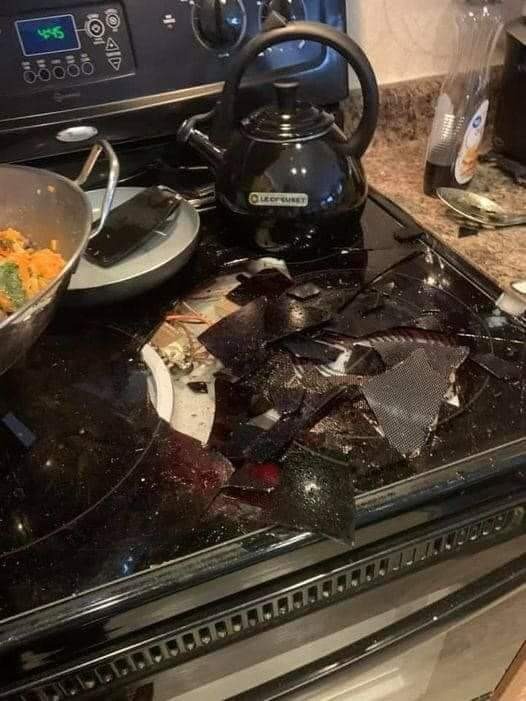
Breaking a glass stove top (usually a ceramic glass or tempered glass cooktop, like on modern electric or induction stoves) is uncommon, but when it happens it can be sudden, loud, and sometimes alarming. Here’s a clear breakdown of why it happens and what it feels like / experiences people report.
🔥 Causes of a Glass Stove Breaking
1. Thermal Shock (Most Common Cause)
Glass cooktops are designed to handle heat, but not extreme temperature differences at the same time.
This can happen when:
- A hot burner is suddenly cooled (like spilling cold water or placing a cold pot on a very hot surface)
- Hot glass is exposed to cold air drafts or water splashes
- Cleaning a hot stove with a wet cloth
👉 The uneven expansion and contraction creates stress that cracks or shatters the glass.
2. Impact or Heavy Weight
Although tempered glass is strong, it’s not indestructible.
Breaking can occur if:
- A heavy pot or pan is dropped on it
- A pressure cooker or cast-iron pan lands hard
- Something falls from a cabinet above the stove
Even a small chip from impact can later spread into a full crack.
3. Manufacturing Defects or Internal Stress
Sometimes the glass has microscopic flaws from production.
- Tiny air bubbles or weak points inside the glass
- Improper tempering during manufacturing
- Internal stress buildup over time
These can cause “spontaneous” cracking even without obvious cause.
4. Incorrect Cookware Use
Certain cookware issues increase risk:
- Rough-bottom pans scratching the surface
- Uneven or warped pots causing pressure points
- Very large pans covering multiple burners unevenly heating the glass
5. Overheating / Prolonged High Heat
Leaving a burner at maximum heat for long periods, especially with empty cookware, can weaken the glass over time.
6. Structural Stress from Installation
If the cooktop is:
- Poorly fitted into the countertop
- Tightened too much in the frame
- Installed on an uneven surface
…it can slowly develop stress cracks.
💥 What It Feels Like / Real Experiences
People who have experienced glass stove breakage often describe similar things:
⚡ 1. Sudden Loud Sound
- A sharp “crack” or “pop”
- Sometimes compared to a gunshot or breaking ice
🌫️ 2. Spiderweb Cracks Spreading Fast
- Cracks appear instantly and spread in branching patterns
- Sometimes the glass stays in place but looks shattered underneath
🔥 3. Heat or Burn Smell (Sometimes)
- If the stove is hot, there may be a faint burnt smell
- Not always present, but can happen with electronic components heating underneath
😳 4. Shock or Confusion
Common reactions:
- Thinking something exploded in the kitchen
- Jumping away immediately
- Confusion about what caused it if nothing obvious fell
🧊 5. Complete Shattering (Less Common)
In severe cases:
- The surface breaks into many small pieces (like safety glass)
- Or collapses inward if structural failure is severe
⚠️ Safety Concerns
Even if the stove still looks partly intact:
- It is not safe to continue using it
- Hidden cracks can worsen suddenly under heat
- Electrical components may be exposed underneath
🧠 Key Insight
Glass cooktops are strong under even, controlled heat, but they are vulnerable to:
- Sudden temperature changes
- Point impacts
- Hidden internal stress
Most failures are not random—they usually have a trigger, even if it’s not immediately obvious.
If you want, I can also explain:
- how to prevent glass stove cracking,
- whether cracks can be repaired or not,
- or what to do immediately after it breaks safely.
