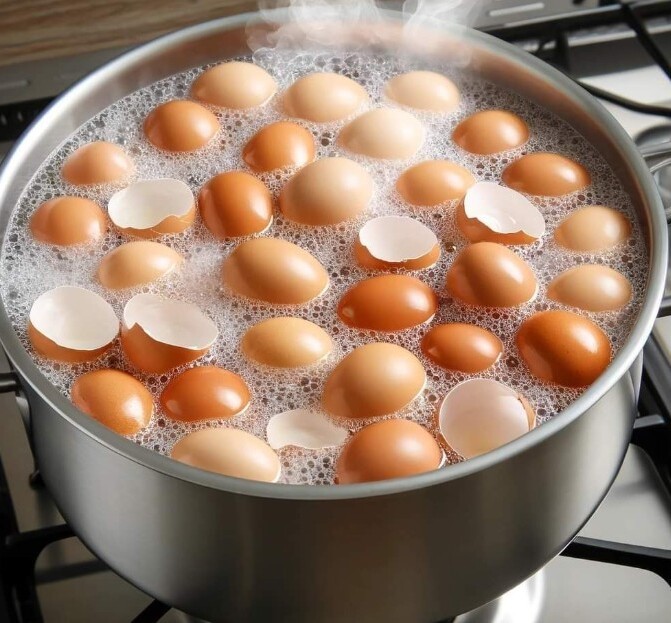
Here’s a detailed guide on boiled eggs, including types, benefits, and tips for perfect cooking:
🥚 What is a Boiled Egg?
- A whole egg cooked in its shell in boiling water.
- Can be soft-boiled (runny yolk) or hard-boiled (fully set yolk).
- Popular as a quick, high-protein snack or meal addition.
🔹 Types of Boiled Eggs
- Soft-Boiled:
- White is firm, yolk is runny.
- Cook 4–6 minutes depending on egg size.
- Medium-Boiled:
- Yolks slightly creamy, whites firm.
- Cook 7–8 minutes.
- Hard-Boiled:
- Fully set yolk and firm white.
- Cook 9–12 minutes.
🩺 Nutritional Benefits
- Protein: ~6–7 g per egg, supports muscle repair and satiety.
- Vitamins: B12, riboflavin, vitamin D.
- Minerals: Selenium, phosphorus, iodine.
- Healthy fats: Mostly unsaturated, plus cholesterol for hormone production.
- Low calorie: ~70–80 calories per large egg.
🔹 Tips for Perfect Boiled Eggs
- Start with room temperature eggs to prevent cracking.
- Boil water first, then gently add eggs with a spoon.
- Use an ice bath after cooking to stop cooking and make peeling easier.
- Peel under running water to help remove stubborn shells.
- Add vinegar or salt to water to prevent whites from leaking if eggs crack.
⚠️ Things to Watch
- Avoid overcooking, which can create a green ring around the yolk (harmless, caused by sulfur).
- Store unpeeled boiled eggs in the fridge up to 1 week.
- Peeling fresh eggs can be harder; slightly older eggs peel more easily.
💡 Tip: Boiled eggs are versatile—eat them plain, in salads, sandwiches, or mashed with avocado for a nutrient-packed snack.
If you want, I can make a quick chart showing perfect cooking times for soft, medium, and hard-boiled eggs, plus tricks to make peeling effortless every time.
Do you want me to do that?
