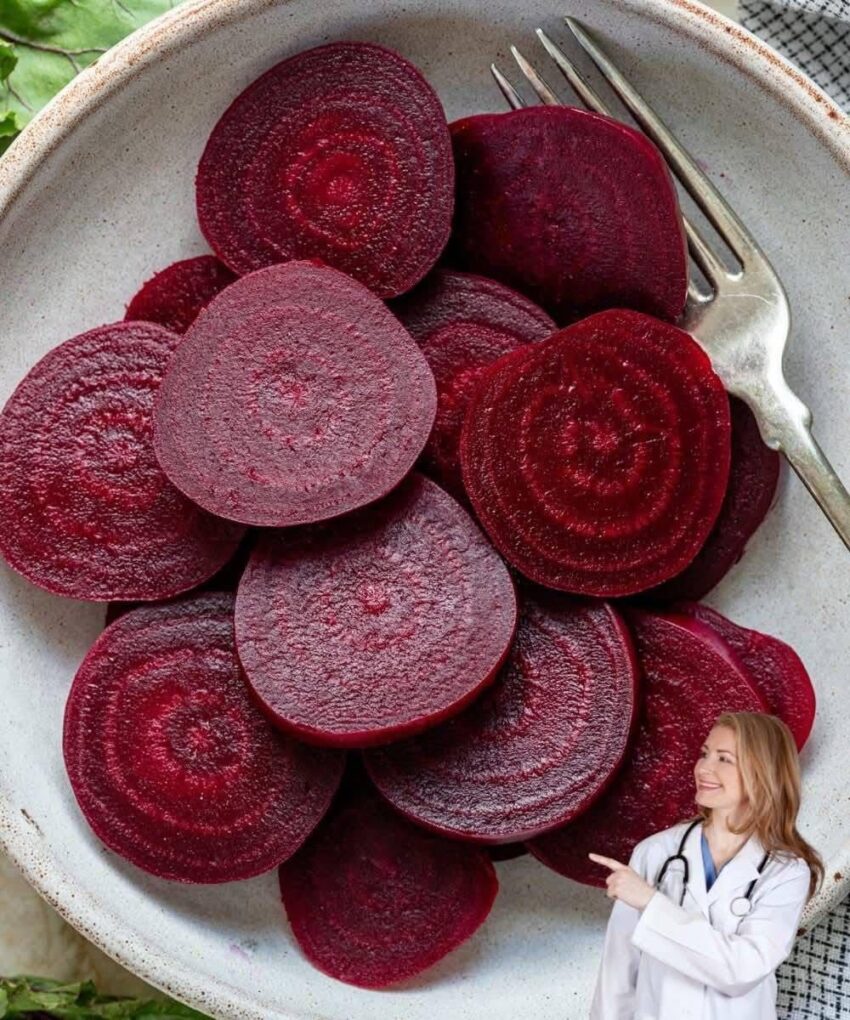
Here’s a detailed overview of beetroot:
1. Botanical Background
- Scientific name: Beta vulgaris
- Family: Amaranthaceae
- The part most commonly eaten is the root, but the greens (leaves) are also edible and nutritious.
2. Varieties
- Red beet: Deep purple-red, sweet flavor, most common variety.
- Golden beet: Yellow-orange, milder taste, less staining.
- Chioggia beet: Striped interior (candy cane appearance), sweet and earthy flavor.
3. Nutritional Value (per 100g, raw)
- Calories: ~43 kcal
- Carbohydrates: 10 g
- Fiber: 2–3 g
- Vitamin C: ~8% of daily value
- Folate: ~20% of daily value
- Potassium: ~9% of daily value
- Rich in antioxidants and nitrates, which may support heart health.
4. Culinary Uses
- Raw: Grated into salads or juiced.
- Roasted or boiled: Sweetens naturally; great in soups (like borscht) or as a side dish.
- Pickled: Popular in Eastern European cuisine.
- Leaves: Sautéed or used in soups and salads.
5. Storage & Preparation
- Store raw beets in a cool, dark place for 1–2 weeks.
- Cooked beets last up to 5 days in the fridge.
- Peel after cooking to reduce staining. Gloves or a little vinegar can help remove stains from hands.
6. Health Benefits
- High in dietary nitrates, which may help lower blood pressure.
- Contains fiber and antioxidants for digestive and overall health.
- Natural sugars provide mild sweetness but are nutrient-dense.
If you want, I can give a simple foil-roasted beet recipe that brings out maximum sweetness and keeps cleanup easy, similar to foil-baked chicken.
Do you want me to do that?
