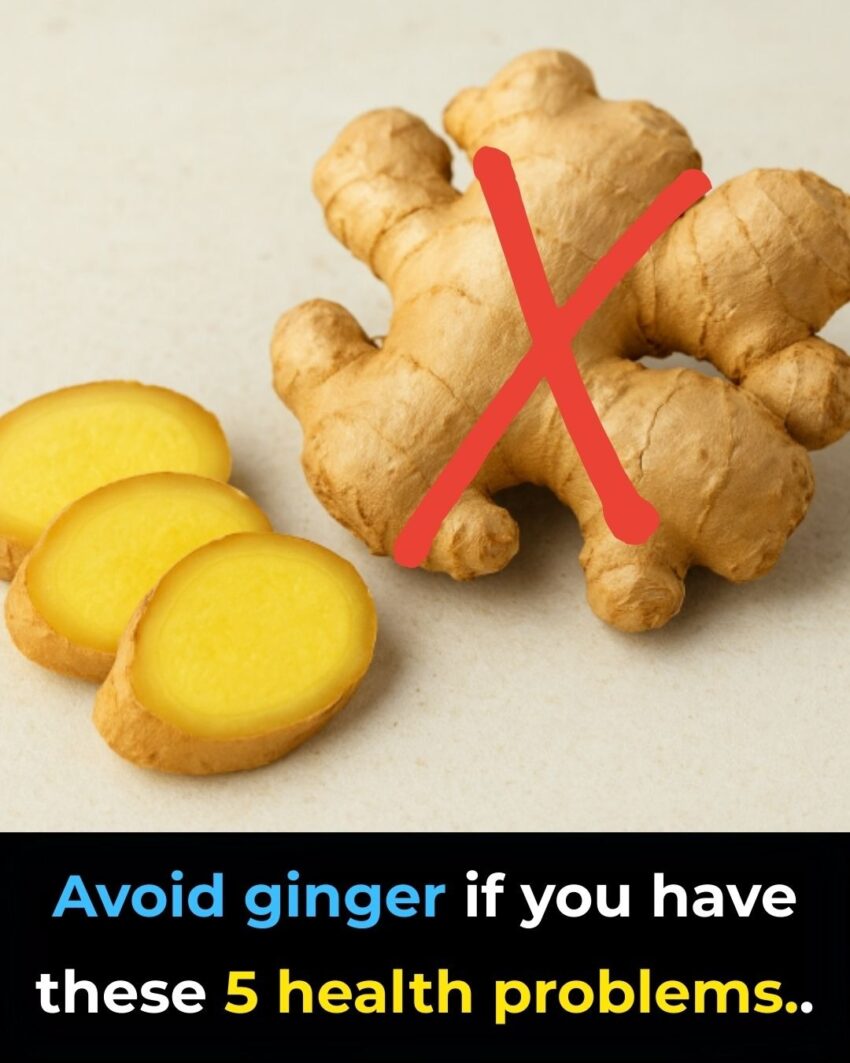
That headline is another oversimplified health warning. Ginger is generally safe and beneficial for most people, but there are some situations where caution is needed—not total avoidance unless advised by a doctor.
Here’s the real, evidence-based breakdown 👇
1. Bleeding disorders or blood thinners
- Ginger can slightly thin the blood.
- If you’re taking medications like warfarin or aspirin, large amounts may increase bleeding risk.
2. Gallstones
- Ginger may stimulate bile production.
- This can worsen symptoms in people with existing gallbladder issues.
3. Low blood pressure (hypotension)
- Ginger can lower blood pressure slightly.
- If your blood pressure is already low, it might cause dizziness or weakness.
4. Diabetes (with medication)
- Ginger may lower blood sugar levels.
- Combined with diabetes medication, this could lead to hypoglycemia (low blood sugar) if not monitored.
5. Before surgery
- Because of its mild blood-thinning effect, ginger is often avoided 1–2 weeks before surgery to reduce bleeding risk.
What about normal use?
- Small to moderate amounts (like in tea or food) are safe for most people.
- Problems usually happen with high doses or supplements, not everyday cooking.
✅ Bottom line
- Ginger is not dangerous for most people, but certain conditions require moderation or medical advice.
- Viral posts saying “avoid it completely” are overstated—it’s about dose and individual health, not fear.
If you want, I can list who should actually benefit the most from ginger and how to use it safely—it’s quite useful for digestion, inflammation, and immunity.
