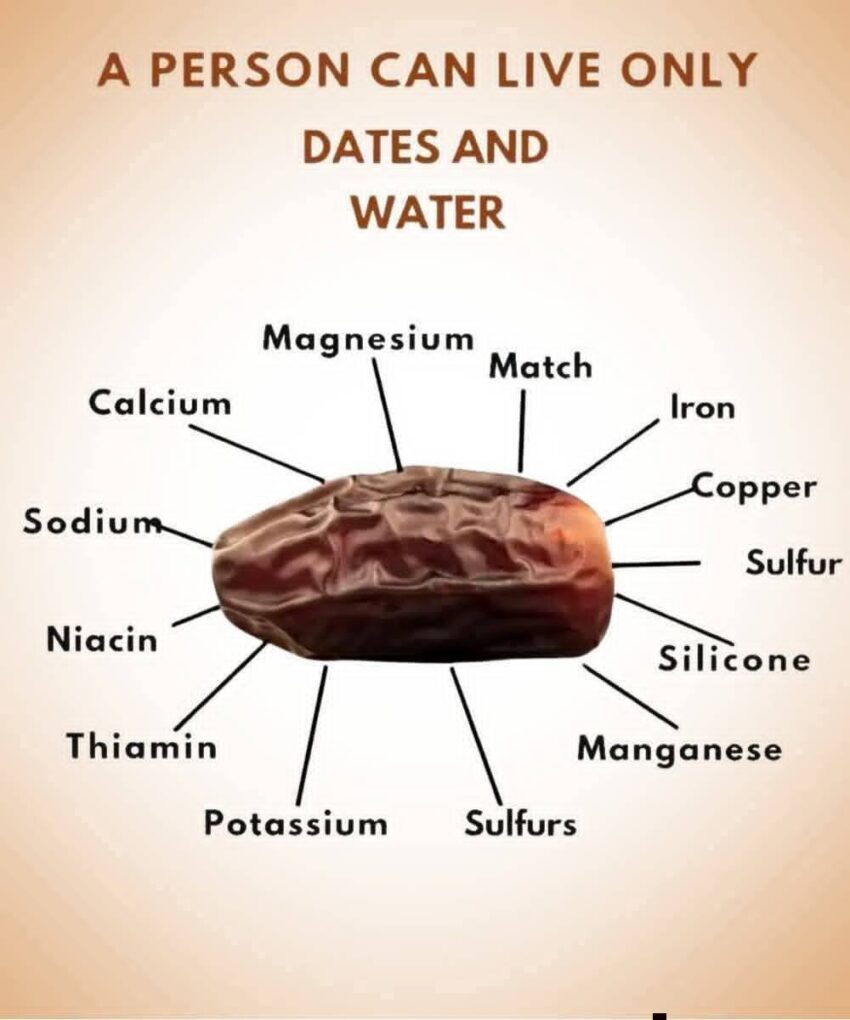
The idea that a person can survive on only dates and water is partially true for short-term survival, but it’s not sustainable long-term. Here’s a clear breakdown:
1. Why Dates Are Nutritious
- Rich in natural sugars: glucose, fructose, and sucrose → provide quick energy.
- Contain fiber, potassium, magnesium, and some vitamins.
- High-calorie density → can sustain energy for a limited time.
2. What Water Provides
- Keeps you hydrated → essential for all bodily functions.
- Prevents dehydration, which is more immediately life-threatening than lack of food.
3. Limitations of a Dates-and-Water Diet
- Protein deficiency: Dates lack sufficient protein → muscles and organs cannot maintain function long-term.
- Fat deficiency: Essential fatty acids are missing → affects brain, heart, and hormone health.
- Micronutrient gaps: Vitamins like B12, D, and minerals like iron and calcium are insufficient.
- Long-term survival: Beyond a few weeks, serious malnutrition and health problems will develop.
4. Historical / Survival Context
- In desert survival situations, dates and water have helped people last days to a couple of weeks, mainly due to their high energy content and hydration support.
- Not recommended as a permanent diet.
Bottom Line
- Short-term survival: Dates + water can sustain energy and hydration for a limited time.
- Long-term health: You need protein, fats, and other vitamins/minerals to survive and stay healthy.
If you want, I can make a “survival diet with dates and water — what it covers and what’s missing” chart so it’s easy to see why it can only last a short period.
Do you want me to make that?
