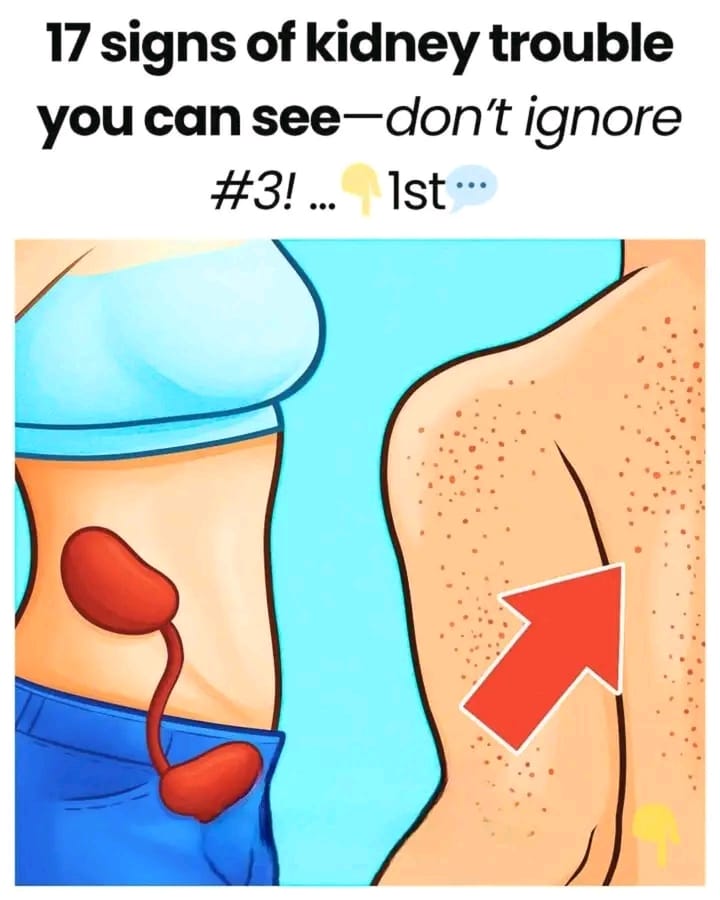
Headlines like “17 signs…don’t ignore #3!” are meant to hook you. Still, kidney problems can show real warning signs—and it’s smart to know them. None of these proves a diagnosis on its own, but patterns matter.
🚨 Possible signs of kidney trouble
💧 Urine-related changes
- Foamy urine → may suggest protein leakage
- Blood in urine (pink, red, cola-colored)
- Urinating more at night (nocturia)
- Reduced urine output
- Burning or pain when urinating (could be infection)
🦵 Swelling & fluid retention
- Swollen ankles, feet, or hands
- Puffiness around the eyes (especially in the morning)
👉 Kidneys help regulate fluid balance—when they struggle, fluid builds up
😴 General body symptoms
- Persistent fatigue or weakness
- Shortness of breath (fluid overload or anemia)
- Nausea or vomiting
- Loss of appetite
🧠 Nerve & concentration effects
- Difficulty concentrating
- Dizziness (can be related to anemia)
🧂 Skin & muscle changes
- Dry, itchy skin
- Muscle cramps (electrolyte imbalance)
🩸 Blood pressure & heart-related
- High blood pressure that’s hard to control
👉 Can be both a cause and a result of kidney issues
👃 Taste & breath changes
- Metallic taste or bad breath (uremia in advanced cases)
⚠️ Important reality check
- These symptoms can come from many other conditions
- Early kidney disease often has no symptoms at all
👉 That’s why testing matters more than symptom lists
🧪 When to get checked
Consider medical evaluation if you have:
- diabetes
- high blood pressure
- family history of kidney disease
- persistent symptoms from the list
Basic tests:
- blood test (creatinine, eGFR)
- urine test (protein, blood)
🚨 Seek urgent care if
- visible blood in urine
- severe swelling
- very little urine
- chest pain or breathing difficulty
🧾 Bottom line
These “17 signs” are warning clues, not a diagnosis.
👉 Kidney disease is best detected early through simple tests, not viral lists.
If you want, I can explain:
👉 which symptoms are most serious vs common and harmless
👉 or how to protect kidney health with simple daily habits
