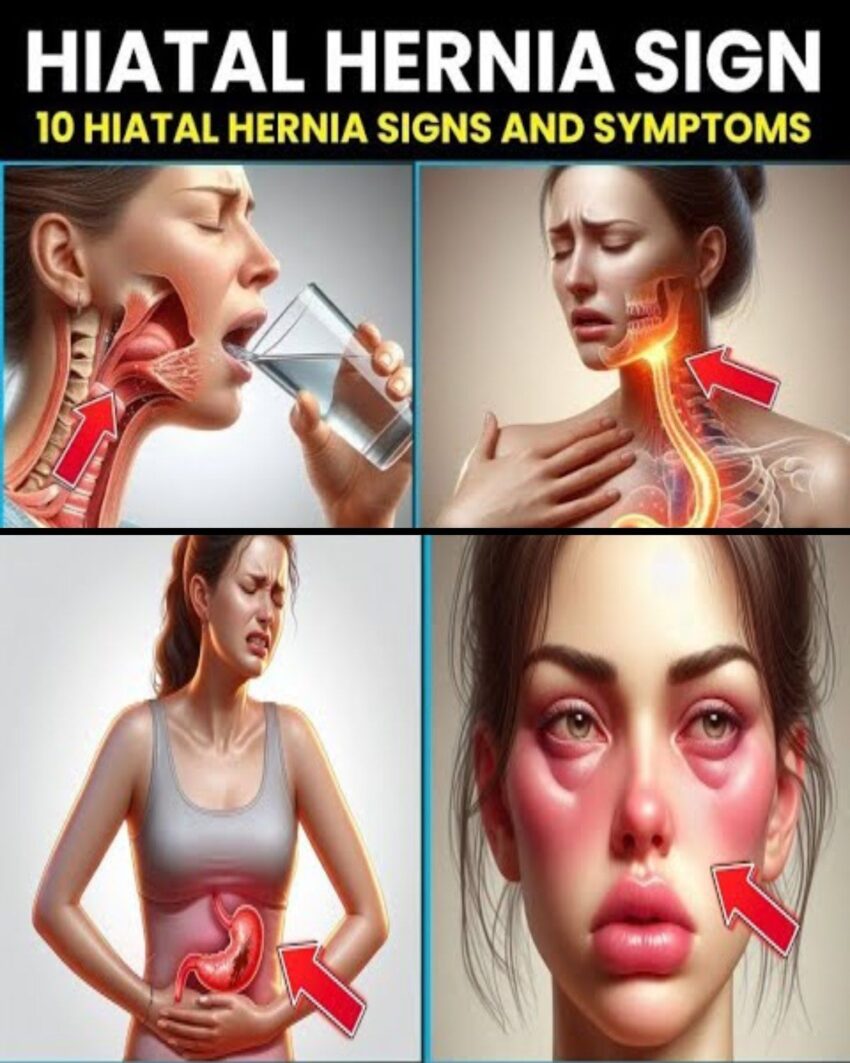
Here are 10 important signs and symptoms of a Hiatal Hernia you should know. Some people have no symptoms at all, but when they do appear, they’re often related to acid reflux and pressure in the chest or upper abdomen:
1. Heartburn
A burning sensation in the chest, especially after eating or when lying down. This is one of the most common signs.
2. Acid Reflux
Stomach acid flowing back into the esophagus, often linked with Gastroesophageal Reflux Disease.
3. Chest Pain
Can feel like pressure or discomfort in the chest—sometimes mistaken for heart-related issues.
4. Difficulty Swallowing (Dysphagia)
Food may feel like it’s getting stuck or moving slowly down the throat.
5. Regurgitation of Food or Liquid
A sour or bitter taste in the mouth from partially digested food coming back up.
6. Shortness of Breath
Large hernias can press against the lungs, making breathing feel restricted.
7. Frequent Burping or Hiccups
Caused by trapped air or irritation of the diaphragm.
8. Nausea or Upset Stomach
A general feeling of discomfort, especially after meals.
9. Feeling Full Quickly
Early satiety—even small meals can make you feel overly full.
10. Chronic Cough or Sore Throat
Stomach acid irritating the throat can lead to coughing, hoarseness, or a persistent sore throat.
⚠️ When to Seek Medical Help
Get urgent care if you experience:
- Severe chest pain (to rule out heart problems)
- Vomiting blood or black stools
- Difficulty swallowing that worsens
Quick Insight
Small hiatal hernias often go unnoticed, but larger ones can significantly impact quality of life—especially when combined with GERD.
If you want, I can also share causes, risk factors, or natural ways to manage symptoms without medication.
