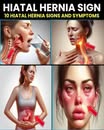
Here’s a detailed guide on hiatal hernia and the 10 key signs and symptoms you should know:
🫁 What is a Hiatal Hernia?
A hiatal hernia occurs when part of the stomach pushes up through the diaphragm into the chest cavity. The diaphragm normally separates the chest from the abdomen and helps keep the stomach in place.
- Types:
- Sliding hiatal hernia – most common; stomach and lower esophagus slide up
- Paraesophageal hernia – less common; part of the stomach pushes next to the esophagus
⚠️ 10 Hiatal Hernia Signs and Symptoms
1. Heartburn
- Burning sensation in chest or throat
- Often worse after eating or lying down
2. Regurgitation
- Acidic or sour liquid comes back into the mouth
3. Difficulty Swallowing (Dysphagia)
- Feeling like food gets stuck in the chest or throat
4. Chest Pain
- Can mimic heart-related pain
- Often after large meals or bending forward
5. Belching and Bloating
- Excess gas, burping, or stomach distension
6. Nausea
- Feeling sick or queasy after meals
7. Shortness of Breath
- Large hernias can press on the diaphragm, making breathing uncomfortable
8. Feeling Full Quickly
- Early satiety, even after a small meal
9. Cough or Hoarseness
- Acid reflux can irritate the throat, causing chronic cough or voice changes
10. Anemia (in Severe Cases)
- Chronic bleeding from hernia irritation → low iron or anemia
💡 When to See a Doctor
- Severe chest pain that could indicate a heart problem
- Difficulty swallowing, persistent vomiting, or weight loss
- Black or bloody stools
- Shortness of breath or severe bloating
🧠 Tips to Manage Hiatal Hernia Symptoms
- Eat smaller, more frequent meals
- Avoid lying down immediately after eating
- Reduce trigger foods: spicy, fatty, or acidic foods
- Maintain a healthy weight
- Elevate head while sleeping
- Medications: antacids, H2 blockers, or proton pump inhibitors (as prescribed)
🧾 Quick Summary
| Symptom | Description |
|---|---|
| Heartburn | Burning chest/throat pain |
| Regurgitation | Acid or food backflow |
| Dysphagia | Trouble swallowing |
| Chest pain | Often after meals or bending |
| Belching/Bloating | Gas and stomach fullness |
| Nausea | Queasy feeling |
| Shortness of breath | Pressure on diaphragm |
| Early satiety | Feeling full quickly |
| Cough/hoarseness | Throat irritation from acid |
| Anemia | Rare, from chronic bleeding |
Bottom line: Hiatal hernias can range from mild and asymptomatic to causing significant discomfort or complications. Lifestyle changes and medications help most, but severe cases may require surgery.
If you want, I can make a visual checklist of hiatal hernia symptoms that’s easy to reference. Do you want me to do that?
