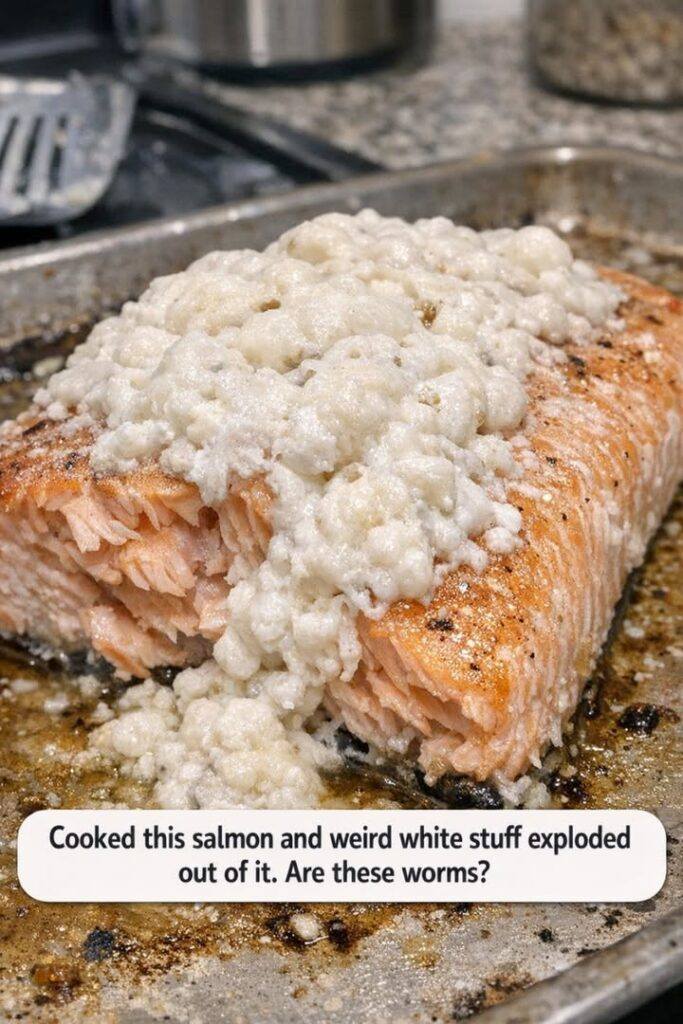
Ah! That “weird white stuff” on cooked salmon is completely normal and nothing to worry about. Here’s the explanation:
What It Is
- The white substance is albumin, a protein found in the fish’s muscle.
- When salmon cooks, the heat causes the muscle fibers to contract, pushing the albumin to the surface.
- It appears as opaque, white, sometimes slightly sticky spots.
Why It Happens
- More visible on fresh, wild-caught salmon because of its higher protein content.
- Happens especially when cooking at high heat or overcooking.
Is It Safe?
✅ Yes! It’s completely safe to eat and poses no health risk.
❌ It is not mold or spoilage.
How to Reduce It
- Cook slowly at moderate heat – e.g., bake at 350°F (175°C) or poach.
- Brine the salmon in saltwater for 10–15 minutes before cooking – reduces protein leakage.
- Avoid overcooking – salmon is done when it flakes easily and reaches 125–130°F (52–54°C) internally.
💡 Tip: If you want your salmon to look prettier, you can gently scrape off the albumin after cooking—it doesn’t affect taste.
If you want, I can make a quick guide to cooking salmon perfectly without the white albumin showing, including baking, pan-searing, and poaching methods.
Do you want me to make that guide?
