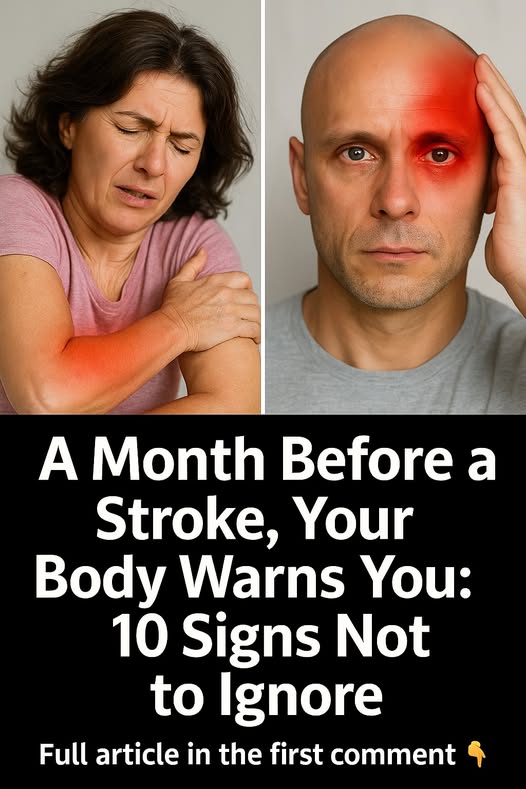
That headline is misleading. A stroke usually does not give reliable warning signs a full month in advance. What doctors do recognize are sudden symptoms or short warning episodes (TIA—mini-strokes) that can happen hours, days, or sometimes weeks before a major stroke.
🧠 What actually happens before a stroke
The real medical warning is often a transient ischemic attack (TIA).
This is a temporary blockage of blood flow to the brain that may last minutes to hours and then disappear—but it is a serious emergency warning sign.
🚨 10 warning signs you should NOT ignore
These are real stroke or TIA symptoms:
1. Sudden numbness or weakness
- Face, arm, or leg
- Usually on one side of the body
2. Trouble speaking
- Slurred speech
- Difficulty understanding others
3. Facial drooping
- One side of the face looks uneven
4. Vision problems
- Blurred vision or loss of vision in one eye
5. Sudden dizziness
- Loss of balance or coordination
6. Severe headache
- Sudden, intense, unusual headache
7. Confusion
- Trouble thinking clearly or sudden disorientation
8. Difficulty walking
- Stumbling or loss of coordination
9. Numbness that comes and goes
- Especially if it repeats in episodes
10. Brief “mini-stroke” episodes
- Symptoms appear and disappear within minutes (classic TIA)
⚠️ Important truth
- Strokes are usually sudden, not gradual over a month
- The real danger sign is any sudden neurological symptom
- Even if symptoms disappear, it is still an emergency
🧭 Remember FAST
- Face drooping
- Arm weakness
- Speech difficulty
- Time to call emergency help immediately
💡 Bottom line
The “1 month warning” idea is mostly internet exaggeration. The real lifesaving message is:
👉 Act immediately when symptoms start—even if they go away.
If you want, I can explain the difference between normal dizziness/headache and true stroke warning signs, which helps avoid unnecessary fear but still keeps you safe.
