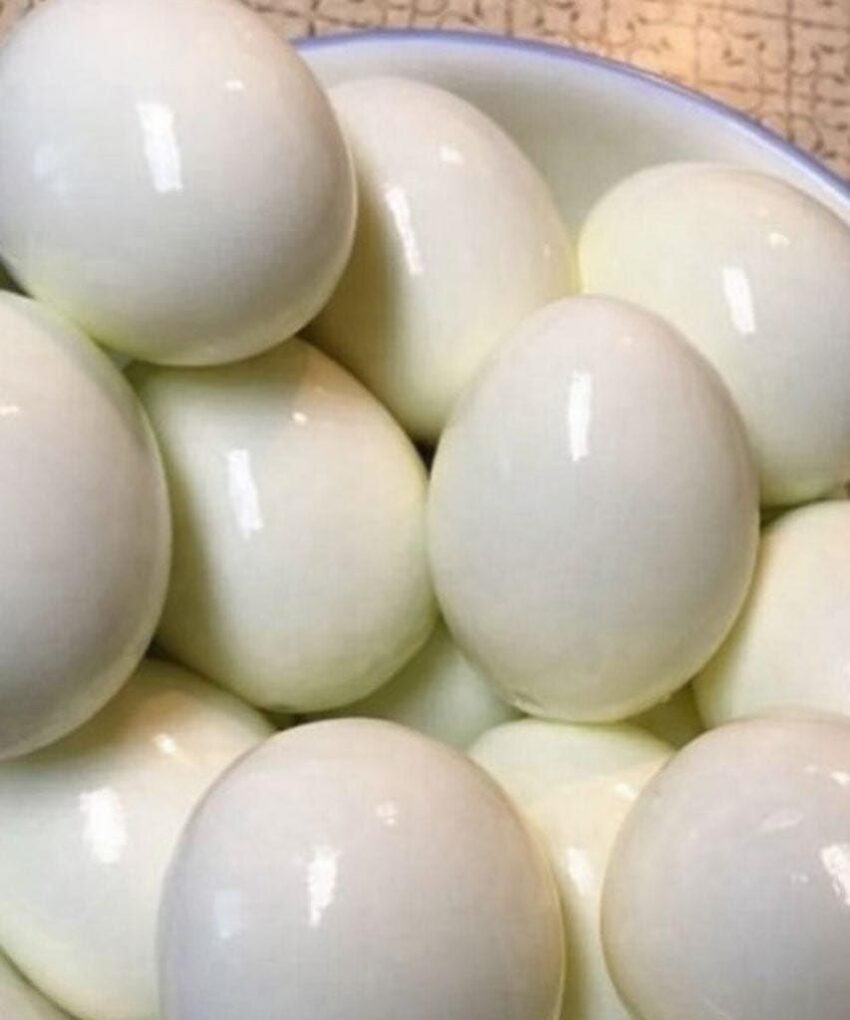
Here’s a complete guide on hard‑boiled eggs, including how to make them perfectly every time and some tips for storage and use:
Hard‑Boiled Eggs Overview
A hard‑boiled egg is an egg cooked in its shell until both the white and yolk are fully set. They’re nutritious, portable, and versatile:
- Nutrition (per large egg):
- Calories: ~70
- Protein: 6 g
- Fat: 5 g
- Vitamins: B12, D, riboflavin
- Minerals: Selenium, phosphorus
- Uses:
- Breakfast or snacks
- Salads, sandwiches, deviled eggs
- Meal prep or lunchboxes
How to Make Perfect Hard‑Boiled Eggs
Ingredients
- Eggs (as many as needed)
- Water
- Ice (for ice bath)
Method 1: Stove‑Top Boiling
- Place eggs in a pot: Cover with cold water, about 1 inch above eggs.
- Bring to a boil: Medium-high heat until water starts rolling boil.
- Turn off heat & cover: Let eggs sit in hot water:
- Soft‑boiled: 4–6 minutes
- Medium: 7–9 minutes
- Hard‑boiled: 10–12 minutes
- Ice bath: Immediately transfer eggs to ice water for 5–10 minutes.
- Peel & enjoy: Gently crack shell and peel under running water.
Method 2: Instant Pot / Pressure Cooker
- Place eggs on a rack with 1 cup water.
- Cook on high pressure:
- 5 min for soft, 7 min for medium, 9 min for hard.
- Quick release, then transfer to ice bath.
Tips for Perfect Hard‑Boiled Eggs
- Use older eggs for easier peeling.
- Don’t skip the ice bath—it stops cooking and prevents green yolk rings.
- Store peeled eggs in the fridge up to 5 days in a sealed container.
- For extra flavor, sprinkle with salt, paprika, or herbs.
If you want, I can also give a few creative ways to use hard‑boiled eggs beyond just breakfast or salads—fun recipes and snack ideas.
Do you want me to do that?
