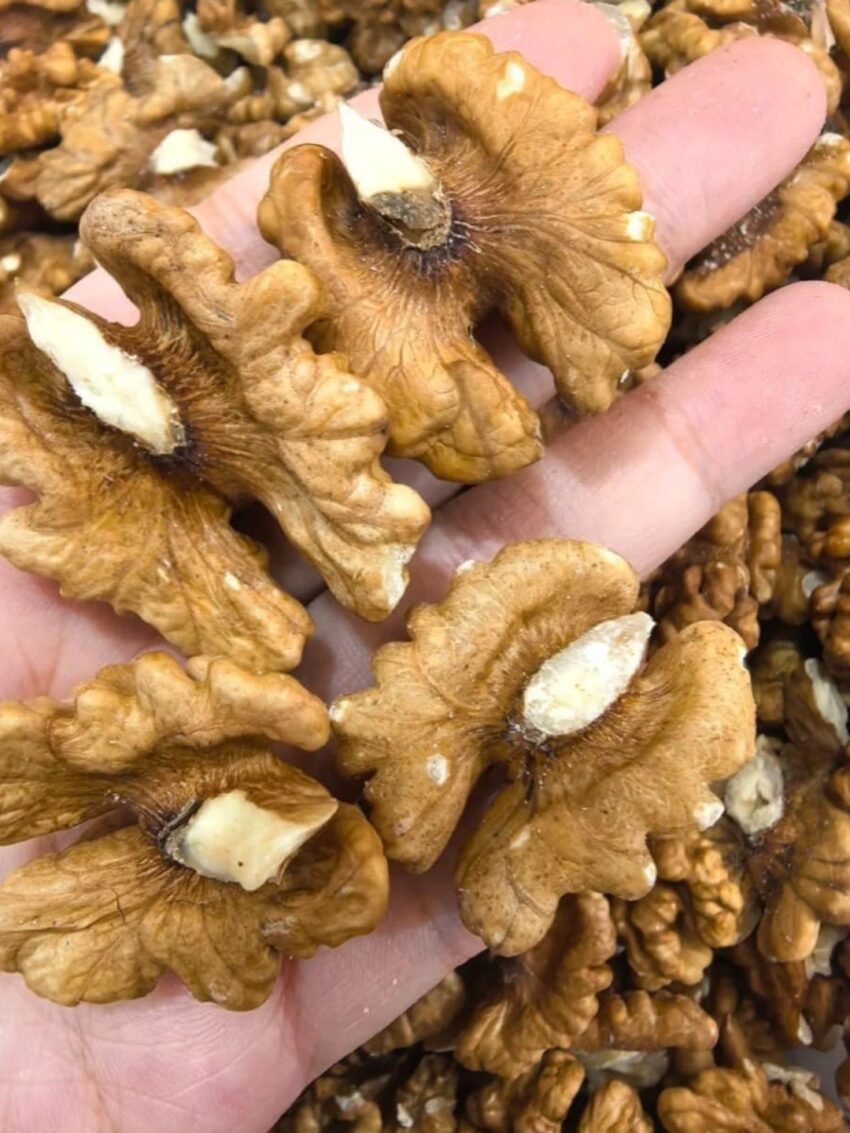
Here’s a thorough overview of walnuts 🌰—their nutrition, uses, and health benefits:
1. What Are Walnuts?
- Walnuts are edible seeds of trees in the genus Juglans.
- Common types: English walnuts (common in the US) and Black walnuts (more robust flavor).
- Hard shell surrounds a wrinkled kernel, often eaten raw, roasted, or in recipes.
2. Nutritional Profile (per 1 oz / ~28 g)
- Calories: ~185 kcal
- Protein: ~4 g
- Fat: ~18 g (mostly healthy unsaturated fats)
- Omega-3 fatty acids (ALA): ~2.5 g
- Carbohydrates: ~4 g
- Fiber: ~2 g
- Vitamins & minerals:
- Vitamin E, B6
- Folate, Magnesium, Phosphorus, Copper, Manganese
3. Health Benefits
- Heart health: Omega-3s support healthy cholesterol and reduce inflammation.
- Brain health: Antioxidants and healthy fats may improve cognitive function.
- Weight management: High fiber and protein can aid satiety.
- Antioxidant properties: Reduce oxidative stress in the body.
4. Culinary Uses
- Snacking: Raw, roasted, or candied.
- Baking: Brownies, muffins, banana bread, and cookies.
- Salads: Adds crunch and flavor to green or grain salads.
- Savory dishes: Pesto, grain bowls, or as a coating for meats and fish.
- Nut butter: Blend into creamy walnut butter for spreads.
5. Storage Tips
- Store in an airtight container in the fridge for up to 6 months.
- Can be frozen for longer storage to prevent rancidity.
- Keep away from strong odors as walnuts absorb flavors easily.
6. Allergies & Precautions
- Walnuts are a tree nut and a common allergen.
- Symptoms of allergy can include hives, swelling, or anaphylaxis in severe cases.
If you want, I can make a list of 5 easy recipes that highlight walnuts, from breakfast to dessert, showing how to use them in both sweet and savory dishes.
Do you want me to make that recipe list?
