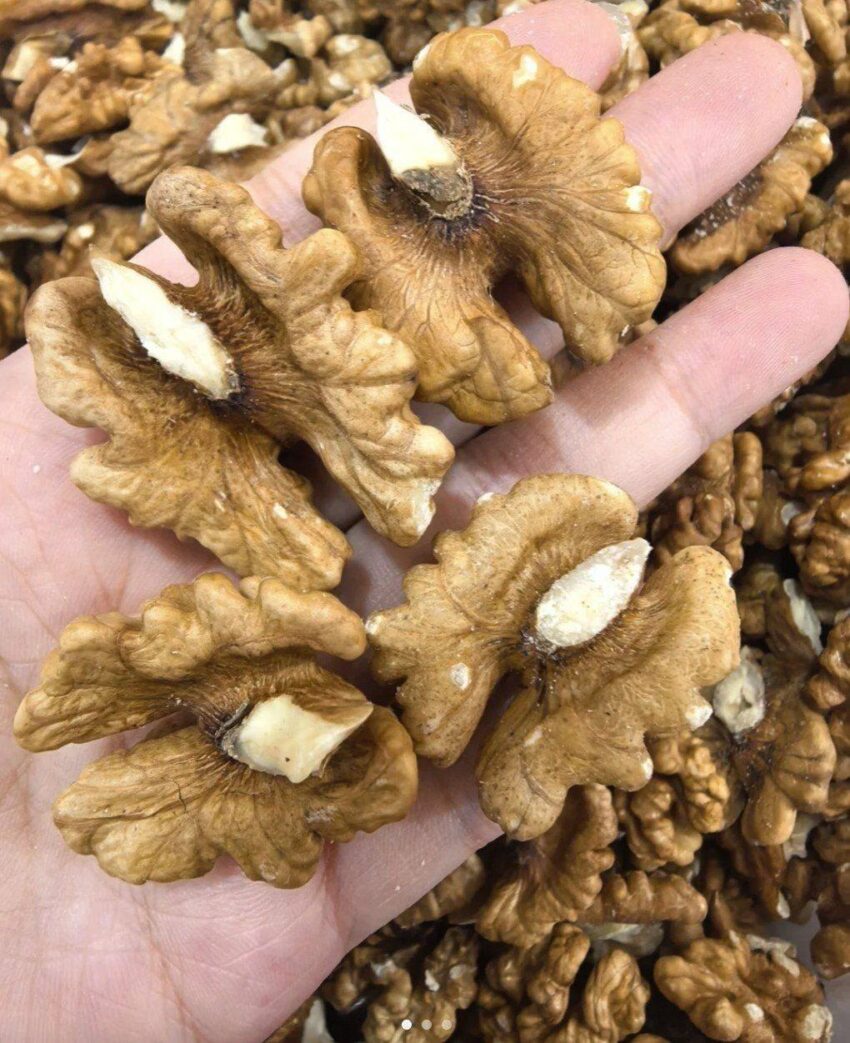
Walnut
A walnut is the edible seed of the walnut tree, widely valued for its rich flavor, crunch, and health benefits. Walnuts are commonly eaten raw, roasted, or used in baking, cooking, and salads.
🌰 Key Types
- English walnut (Juglans regia): Most common globally, mild flavor, large kernel.
- Black walnut (Juglans nigra): Stronger, earthier flavor, harder shell.
🥗 Nutritional Benefits (per 1 oz / ~28 g)
- Calories: ~185 kcal
- Protein: 4 g
- Fat: 18 g (mostly healthy polyunsaturated fats, including omega‑3s)
- Carbs: 4 g
- Fiber: 2 g
- Rich in vitamins (B6, folate), minerals (magnesium, copper, manganese), and antioxidants
🥘 Culinary Uses
- Baking: Brownies, cakes, cookies, and breads.
- Salads: Adds crunch and nutty flavor.
- Snacks: Roasted, salted, or raw.
- Cooking: Pesto, sauces, or topping roasted vegetables.
- Breakfast: Added to oatmeal, yogurt, or smoothie bowls.
🌿 Health Benefits
- Heart health: Omega‑3s help reduce inflammation and support cardiovascular health.
- Brain health: Antioxidants and polyphenols may protect brain cells.
- Weight management: High in fiber and protein; helps feel full.
- Blood sugar control: May improve insulin sensitivity in some studies.
💡 Tips for Use and Storage
- Store in airtight containers in the fridge to prevent oils from going rancid.
- Lightly toast to enhance flavor before adding to recipes.
- Chop or crush as needed for even distribution in dishes.
If you want, I can also make a list of 5 easy ways to include walnuts daily for maximum health benefits.
