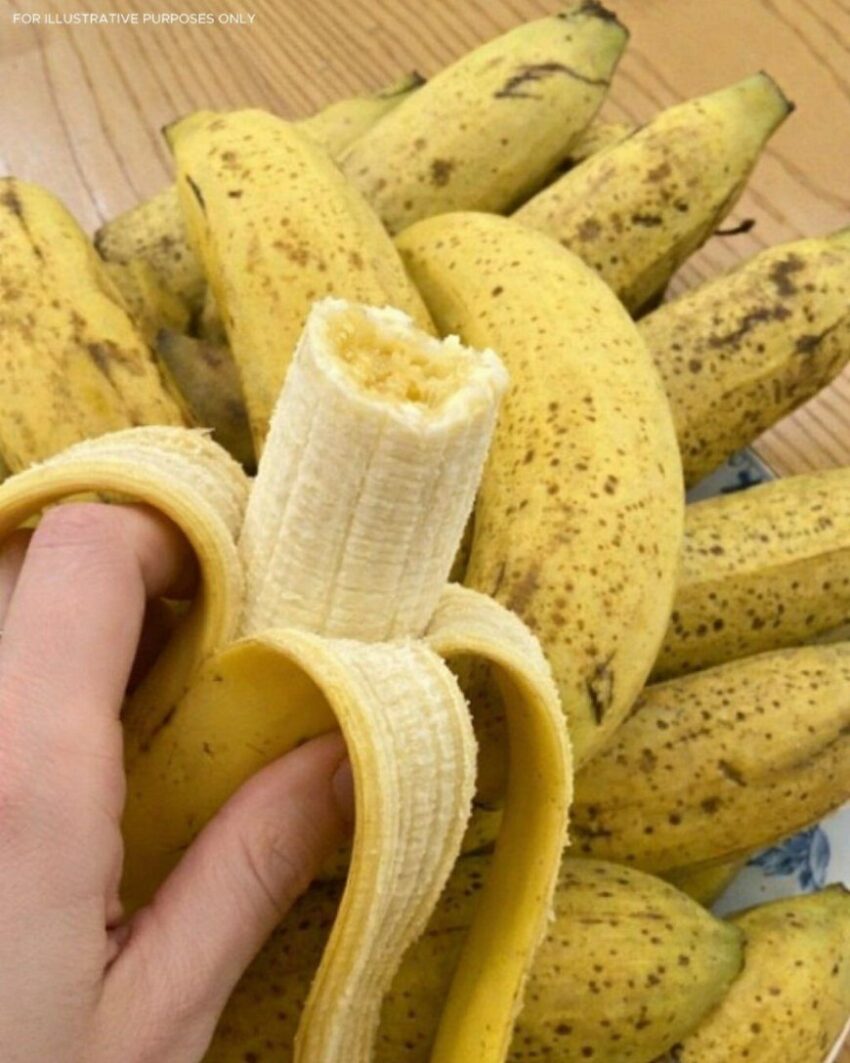
The Cavendish banana is the most common banana variety worldwide, recognizable for its sweet taste, soft texture, and yellow peel when ripe. It dominates global banana exports and is the variety you’ll usually find in grocery stores.
Key Facts About Cavendish Bananas
Botanical Info
- Scientific name: Musa acuminata (AAA group)
- Origin: Southeast Asia, cultivated widely in tropical regions.
- Type: Seedless, parthenocarpic (fruits develop without pollination).
Appearance
- Long, slightly curved bananas
- Smooth yellow skin when ripe; green when unripe
- Soft, creamy flesh
Taste and Use
- Sweet and mildly tangy flavor
- Eaten raw, blended into smoothies, baked in bread or cakes, or fried for snacks
Nutritional Value (per 100 g)
- Calories: ~89 kcal
- Carbohydrates: 23 g
- Fiber: 2.6 g
- Sugars: 12 g
- Potassium: 358 mg
- Vitamins: High in vitamin C and vitamin B6
Cultivation & Global Importance
- Dominates about 47% of global banana production, largely replacing the previously popular Gros Michel banana.
- Grows best in tropical climates with warm temperatures, high humidity, and well-drained soil.
- Propagated asexually (via suckers or tissue culture), which makes it vulnerable to diseases like Panama disease (Fusarium wilt).
Fun Facts
- Named after William Cavendish, 6th Duke of Devonshire, whose gardeners cultivated this variety in the 19th century.
- Cavendish bananas are clonally identical, meaning a single disease can threaten the entire global supply.
- Despite their global popularity, they are not genetically diverse, which is a concern for future banana farming.
💡 Tip: For the best flavor, eat Cavendish bananas when they are bright yellow with a few brown specks—that’s when they’re at peak sweetness.
I can also give a quick guide on storing and ripening Cavendish bananas to keep them fresh longer and use them in recipes.
Do you want me to do that?
