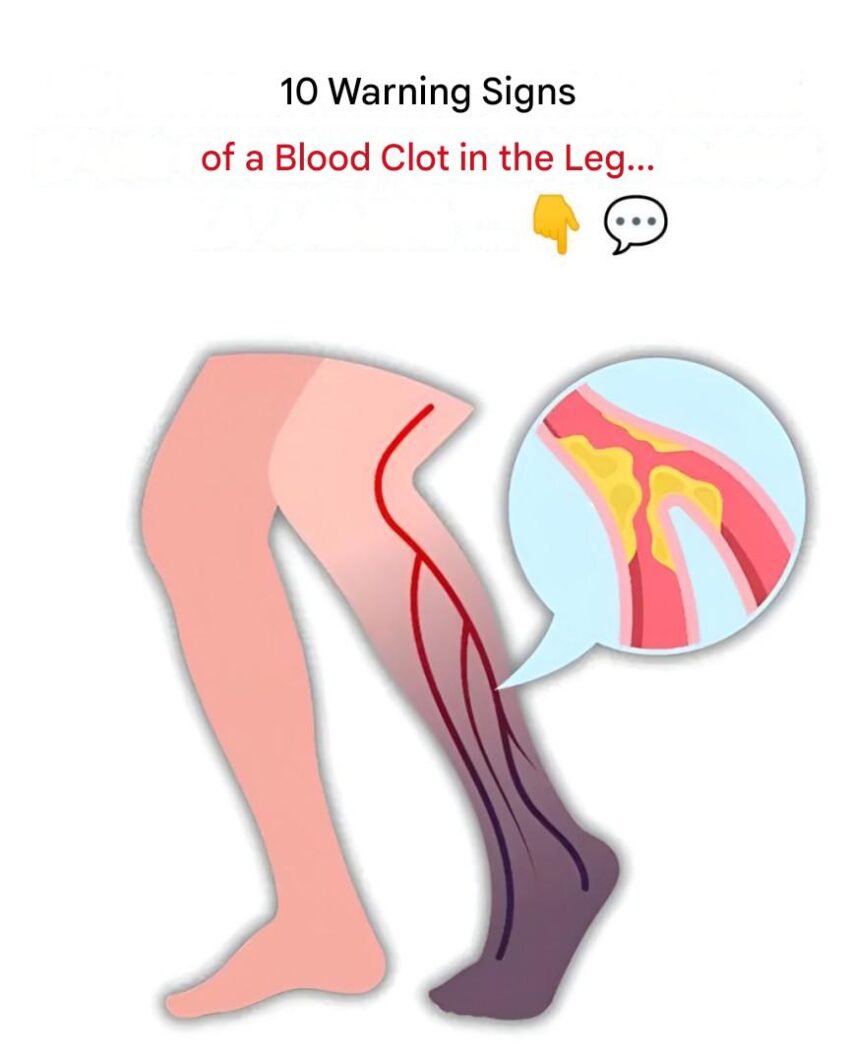
PART 1: Early Warning Signs of a Blood Clot in the Leg (Deep Vein Thrombosis Explained Clearly)
A blood clot in the leg—medically known as Deep Vein Thrombosis—is a serious condition that can become life-threatening if not recognized early. While some cases develop silently, many people do experience warning signs that shouldn’t be ignored.
Understanding these symptoms can help you act quickly and potentially prevent complications like a clot traveling to the lungs (called Pulmonary Embolism).
Why Blood Clots Form in the Leg
Blood clots often develop when blood flow slows down or becomes stagnant. This can happen due to:
- Long periods of sitting (travel, desk jobs)
- Recent surgery or injury
- Pregnancy
- Certain medications
- Smoking
- Obesity
When circulation is reduced, blood can thicken and form a clot inside a vein—most commonly in the calf or thigh.
The 10 Most Common Signs of a Blood Clot in the Leg
Not everyone will have all of these symptoms, but even one or two can be important.
1. Swelling in One Leg
Sudden swelling—especially in just one leg—is one of the most noticeable signs. The affected area may feel tight or look visibly larger than the other leg.
2. Persistent Leg Pain or Tenderness
Pain often starts in the calf and may feel like:
- Cramping
- Soreness
- A dull ache
It may worsen when standing or walking.
3. Warm Skin Over the Affected Area
The skin around the clot may feel warmer than the surrounding areas due to inflammation and increased blood flow to the region.
4. Red or Discolored Skin
You might notice:
- Redness
- Bluish or pale discoloration
This change in color is a key visual warning sign.
5. A Feeling of Heaviness in the Leg
Some people describe it as a “dragging” sensation or unusual heaviness, especially after sitting or standing for long periods.
6. Visible Surface Veins
Veins near the skin may appear more prominent or swollen as blood flow is redirected.
7. Pain That Worsens With Movement
Walking or flexing your foot may increase discomfort, particularly in the calf area.
8. Unexplained Leg Fatigue
The affected leg may feel unusually tired or weak, even without much activity.
9. Skin That Feels Tight or Stretched
Swelling can cause the skin to feel tight, shiny, or stretched.
10. Mild Fever (in Some Cases)
A low-grade fever may occur as the body responds to inflammation.
When It Becomes Dangerous
A clot can break loose and travel to the lungs, causing a pulmonary embolism. This is a medical emergency.
Emergency symptoms include:
- Sudden shortness of breath
- Chest pain
- Rapid heartbeat
- Coughing (sometimes with blood)
If these occur, seek immediate medical help.
Who Is Most at Risk?
You may have a higher risk if you:
- Sit for long hours (office work, long flights)
- Recently had surgery
- Are over age 60
- Smoke
- Have a family history of clotting disorders
How to Help Prevent Blood Clots
1. Stay Active
Regular movement improves circulation. Even small actions like stretching or walking help.
2. Avoid Long Periods of Sitting
If you’re traveling or working at a desk:
- Stand up every 1–2 hours
- Move your legs frequently
3. Stay Hydrated
Proper hydration helps keep blood from thickening.
4. Maintain a Healthy Weight
Excess weight increases pressure on veins.
5. Follow Medical Advice
If you’re at risk, a doctor may recommend medications or compression stockings.
Why Early Detection Matters
The earlier Deep Vein Thrombosis is identified, the easier it is to treat and prevent complications.
Ignoring symptoms can allow the clot to grow or travel, increasing danger.
Final Thoughts
A blood clot in the leg is not something to guess about or treat at home. While symptoms can seem mild at first, they can quickly escalate.
If you notice unusual swelling, pain, or skin changes—especially in one leg—don’t wait. Getting medical attention early can be life-saving.
PART 2: Simple Daily Routine to Reduce Risk of Blood Clots
Morning
- Drink a glass of water
- Do light stretching for 5–10 minutes
During the Day
- Walk every 1–2 hours
- Avoid sitting too long
- Keep legs moving (ankle rotations, flexing)
Evening
- Light walk after dinner
- Elevate your legs for 10–15 minutes
Extra Tips
- Wear comfortable, non-restrictive clothing
- Stay hydrated throughout the day
- Follow your doctor’s advice if at risk
Source
Health information adapted from:
- Centers for Disease Control and Prevention
- National Health Service
If you want, I can turn this into a viral blog post, infographic, or YouTube script with hooks and storytelling.
