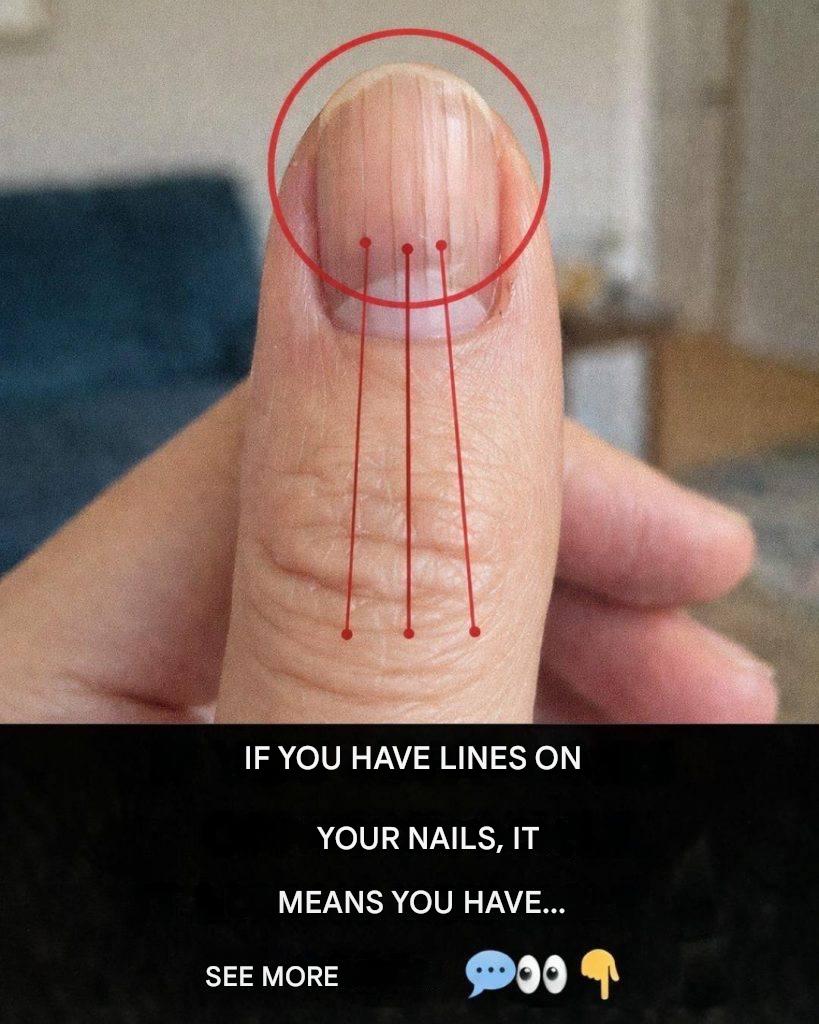
Lines on your nails can look alarming, but most of the time they’re harmless and related to normal growth or minor changes in the body. Still, certain patterns can give clues about underlying health issues.
Here’s how to understand them 👇
🧠 Types of nail lines & what they may mean
1. Vertical lines (most common)
These run from the cuticle to the tip.
Possible causes:
- Aging (very common)
- Mild dehydration
- Minor nutrient gaps
Usually not a sign of disease and don’t need treatment.
2. Horizontal grooves
Known medically as Beau’s lines
What they may indicate:
- Past illness or high fever
- Physical stress or surgery
- Temporary interruption in nail growth
If multiple nails are affected at the same time, it often points to a systemic event your body went through.
3. White horizontal lines
Called Mees’ lines
Possible causes:
- Certain medications
- Heavy metal exposure
- Serious illness (rare cases)
These move as the nail grows.
4. Deep horizontal white bands
Known as Muehrcke’s lines
Linked to:
- Low blood protein levels
- Liver or kidney issues
Unlike other lines, these don’t move with nail growth.
5. Dark vertical lines
Sometimes called melanonychia
Causes can include:
- Increased pigment (common in darker skin tones)
- Injury
- Rarely, a serious condition like Melanoma
⚠️ Get checked if:
- The line is new
- It’s widening or uneven
- It involves only one nail
🚨 When to see a doctor
Pay attention if you notice:
- Sudden appearance of lines on multiple nails
- Deep grooves or color changes
- Nail thickening, splitting, or pain
- Dark streaks changing over time
🥗 Simple prevention tips
- Stay hydrated
- Eat a balanced diet (protein, iron, zinc)
- Avoid nail trauma
- Don’t overuse harsh nail products
✔️ Bottom line
Most nail lines are completely normal, especially vertical ones. But certain patterns—especially horizontal grooves or dark streaks—can sometimes reflect underlying health issues.
If you want, you can describe your nail lines (color, direction, number of nails affected), and I’ll help you narrow down what they most likely mean.
