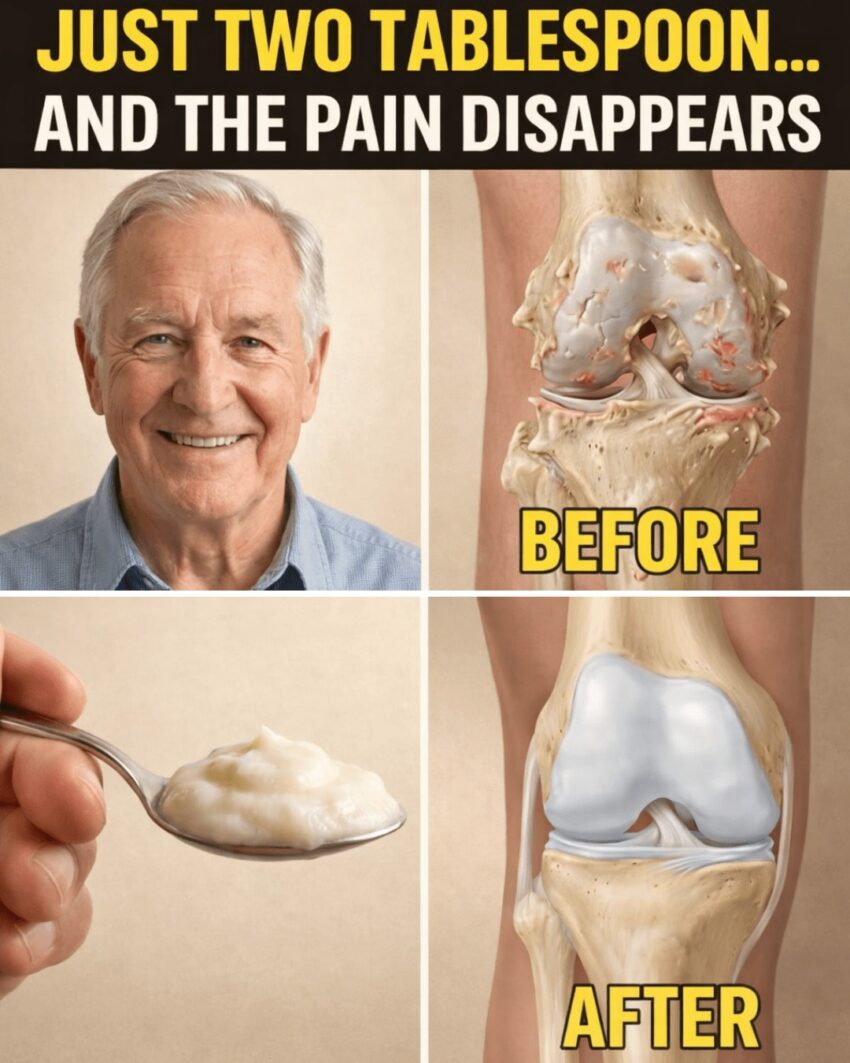
That kind of headline is typical wellness marketing—it points to a “miracle food,” but no single traditional food can reliably “quiet knee pain” or rebuild cartilage on its own. Knee health depends on many factors: weight, activity level, joint wear, inflammation, and medical conditions like osteoarthritis.
That said, one food group often promoted in these claims is:
🍲 🦴 Bone broth
🧠 Why it’s mentioned
Bone broth contains:
- collagen (broken down into gelatin during cooking)
- amino acids like glycine and proline
- small amounts of minerals
🧪 What research actually says
👍 Possible benefits
- May support hydration and general nutrition
- Provides building blocks for protein intake
- Can be soothing and low-calorie
⚠️ What is NOT proven
- It does not rebuild cartilage
- It does not cure osteoarthritis
- It does not reliably reduce knee pain in clinical trials
🦵 What actually helps knee pain (evidence-based)
🏋️ 1. Strengthening muscles
- Strong quadriceps and hamstrings reduce knee stress
- Physical therapy is one of the most effective treatments
⚖️ 2. Weight management
- Even small weight loss reduces pressure on knees significantly
🧴 3. Anti-inflammatory diet pattern
More helpful than one food:
- fruits and vegetables
- omega-3 fats (fish, nuts)
- whole grains
💊 4. Medical treatments (if needed)
- physiotherapy
- pain management
- joint injections in some cases
🧠 Simple takeaway
Bone broth is a nutritious traditional food, but it is not a treatment for cartilage damage or knee pain. Real improvement comes from movement, weight control, and medical care when needed.
If you want, I can also tell you:
- the best exercises for knee pain after 40
- or foods that actually help reduce joint inflammation in studies
- or early signs of osteoarthritis you shouldn’t ignore
