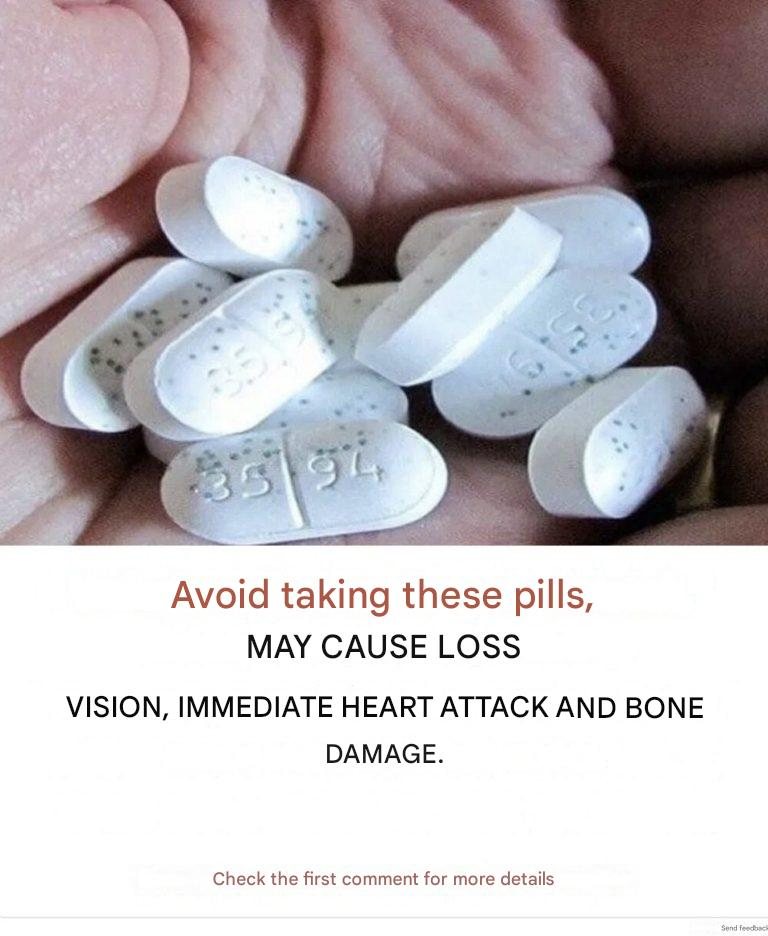
That kind of all-caps warning is meant to alarm, but it’s too vague to be useful.
Some medicines can increase the risk of blood clots or heart problems, but it depends on the specific drug, dose, and your personal risk factors.
Here’s a clearer, fact-based view:
⚠️ Medicines known to affect clot or heart risk
💊 Hormonal therapies
- Birth control pills or hormone replacement therapy (contain estrogen)
- Can slightly increase risk of blood clots (DVT/PE), especially if:
- you smoke
- you’re overweight
- you’re over 35
💊 Painkillers (NSAIDs)
Examples: Ibuprofen, Diclofenac
- Long-term or high-dose use may increase risk of:
- heart attack
- stroke
💊 Certain cancer or immune drugs
- Some chemotherapy or targeted therapies can raise clot risk
- Usually monitored closely by doctors
💊 Erythropoiesis-stimulating agents
- Used for anemia in some conditions
- Can increase blood thickness → clot risk
💊 Some COVID-era concerns (clarified)
- Early reports linked rare clots to certain vaccines, but:
- events were very rare
- benefits far outweighed risks for most people
🧠 Important context
✔️ Risk ≠ certainty
Even with these medicines:
- Most people do not develop clots
- Risk is usually small but real
✔️ Personal factors matter more
Risk increases if you have:
- smoking habit
- obesity
- long immobility (travel, bed rest)
- previous clot history
- certain genetic conditions
🚨 Warning signs of a blood clot
Seek urgent care if you notice:
- swelling or pain in one leg
- sudden chest pain
- shortness of breath
- coughing blood
❗ Don’t do this
- Don’t stop prescribed medication suddenly
- Don’t rely on viral warnings without knowing the exact drug
🧾 Bottom line
👉 Some tablets can increase clot or heart risk, but the danger depends on which medicine and your health profile
👉 Viral messages exaggerate by making it sound like “all tablets are dangerous”
If you want, tell me the exact tablet name, and I’ll explain its real risks and whether you should be concerned.
