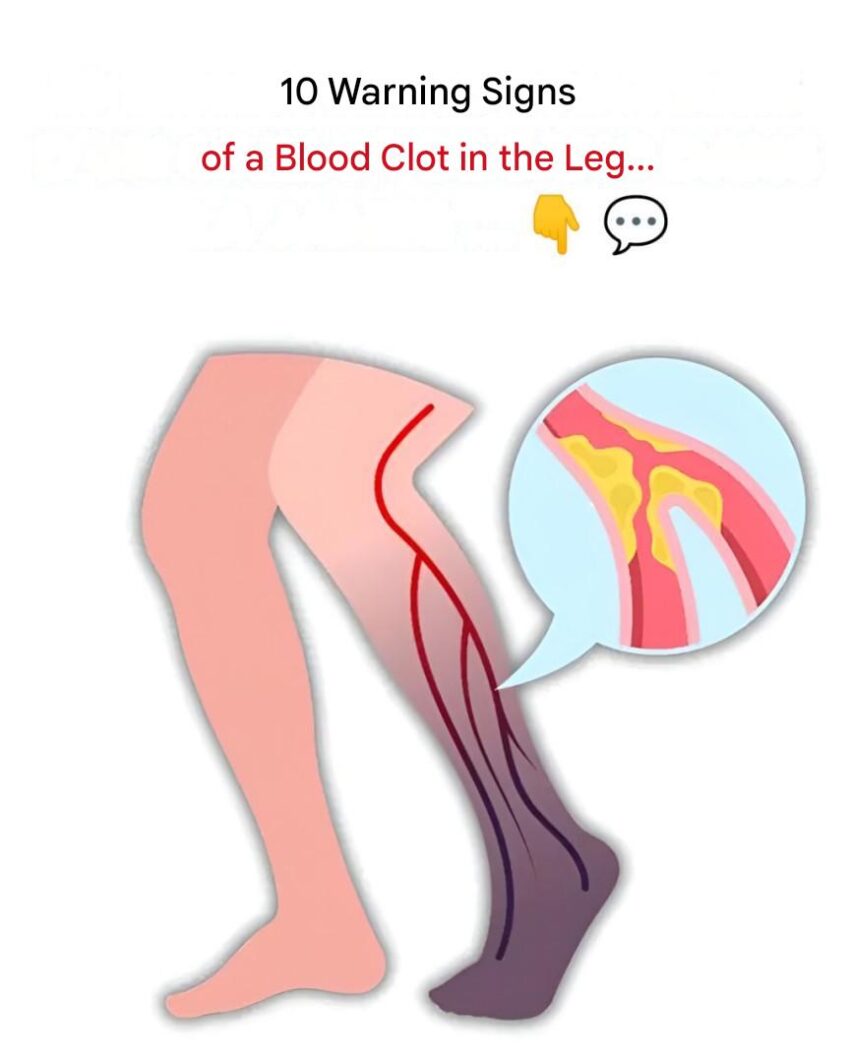
A blood clot in the leg is usually referring to deep vein thrombosis (DVT), where a clot forms in a deep vein (often the calf or thigh). It can be serious because the clot may travel to the lungs (pulmonary embolism).
Here are the main warning signs doctors look for:
🦵 10 main signs of a blood clot in the leg (DVT)
1. 🦵 Swelling in one leg
- Usually in the calf or thigh
- One leg looks noticeably bigger than the other
2. 😖 Pain or tenderness
- Often starts in the calf
- Feels like cramping or soreness
- May worsen when walking or standing
3. 🔴 Red or discolored skin
- Skin may look red, bluish, or darker than usual
4. 🔥 Warmth in the area
- Affected leg feels warmer than the other
5. 🧍 Tight or heavy feeling in the leg
- Sensation of pressure or fullness
6. ⚖️ Increased pain when flexing foot upward
- Pain may worsen when pulling toes toward the shin
7. 👀 Visible surface vein changes
- Veins may look more prominent or swollen
8. ⚡ Sudden unexplained leg pain
- Especially if no injury occurred
9. 🚶 Difficulty walking comfortably
- Pain or swelling makes movement harder
10. 🚨 Signs of a possible emergency (if clot moves to lungs)
Seek immediate help if you have:
- Sudden shortness of breath
- Chest pain
- Coughing blood
- Rapid heartbeat
⚠️ Important reality check
- DVT can sometimes have no obvious symptoms
- It requires medical diagnosis (ultrasound test)
- Self-diagnosis is not reliable
🧠 Bottom line
A blood clot in the leg usually causes one-sided swelling, pain, warmth, and redness, but it can also be silent—so risk factors matter too (long travel, inactivity, surgery, smoking, etc.).
If you want, I can also explain:
- 🚶 how to prevent blood clots during travel
- 💊 who is most at risk for DVT
- 🧠 or early lifestyle habits that reduce clot risk 👍
