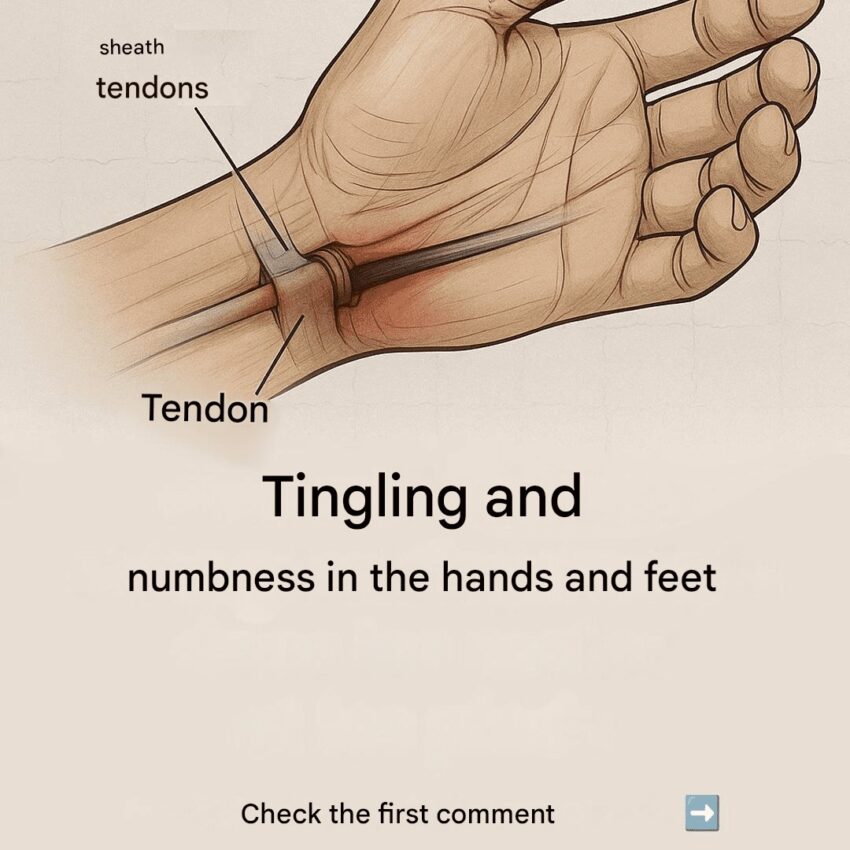
That headline is another clickbait teaser, but the underlying topic—numbness in the hands—can actually have several real medical explanations, ranging from harmless to important.
Here’s what it really can mean:
🖐️ Why your hands may go numb
🟢 1. Nerve compression (most common)
This happens when a nerve is temporarily “pinched.”
Examples:
- Sleeping on your arm
- Leaning on your elbow or wrist
- Repetitive hand movements
👉 Result:
- Tingling (“pins and needles”)
- Temporary numbness
- Usually goes away quickly
🟡 2. Carpal tunnel syndrome
A common condition affecting the wrist nerve.
Symptoms:
- Numbness in thumb, index, middle finger
- Worse at night or with typing/phone use
- Hand weakness over time
🟡 3. Poor circulation
Reduced blood flow to the hands due to:
- Cold temperatures
- Tight clothing or posture
- Sitting/lying in one position too long
🟠 4. Vitamin deficiencies
Especially:
- Vitamin B12 deficiency
- Sometimes B6 or folate issues
👉 Can cause:
- Persistent tingling
- Numbness in hands/feet
- Fatigue or weakness
🔴 5. Nerve or spinal issues (more serious)
Examples:
- Cervical (neck) nerve compression
- Herniated disc
- Neuropathy (nerve damage, often from diabetes)
👉 Signs to watch:
- Ongoing numbness
- Pain radiating from neck/arm
- Weak grip
⚠️ 6. When it could be urgent
Seek medical help if numbness:
- Appears suddenly on one side of the body
- Comes with facial drooping or speech problems
- Happens with chest pain or shortness of breath
👉 These could signal a stroke or heart issue
🧠 Bottom line
Hand numbness usually comes from:
temporary nerve pressure or posture issues
But if it is frequent, persistent, or worsening, it may indicate:
nerve compression, vitamin deficiency, or circulation problems
If you want, tell me your symptoms (when it happens, which fingers, how long it lasts), and I can help you narrow down the most likely cause.
