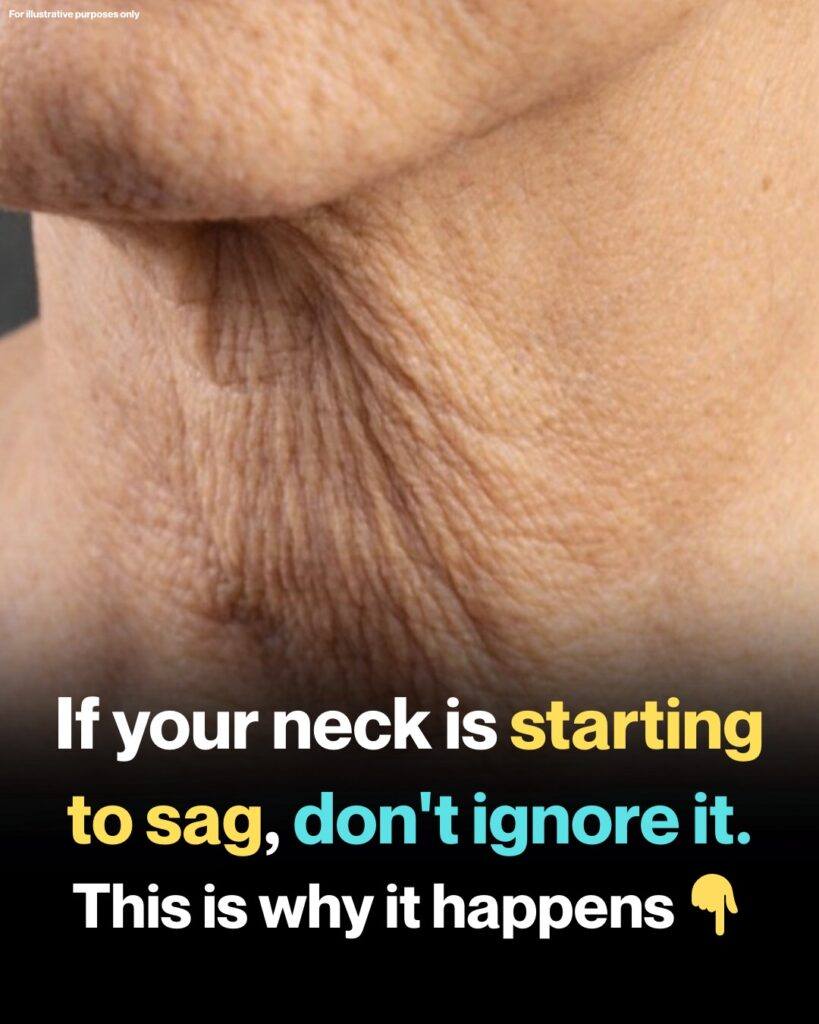
A sagging neck (often called “turkey neck”) isn’t a mystery signal—it’s a normal combination of aging, skin changes, and muscle laxity. Some factors speed it up, but it’s not something you can reverse overnight.
🧠 Why the neck starts to sag
🧬 1. Collagen & elastin loss
As you age, your skin makes less collagen and elastin—the proteins that keep it firm. The neck has thin skin, so it shows changes early.
💪 2. Muscle weakening
The underlying neck muscle (platysma) can loosen and form visible bands or drooping.
☀️ 3. Sun damage
UV exposure breaks down collagen faster, leading to looser, crepey skin over time.
⚖️ 4. Weight changes
Losing or gaining weight can stretch the skin, making sagging more noticeable.
📱 5. “Tech neck”
Frequent downward head posture can contribute to skin folding and reduced muscle tone.
🧴 6. Skincare neglect
People often care for the face but ignore the neck, which accelerates visible aging.
👍 What actually helps (realistic options)
🧴 Daily habits
- Sunscreen on the neck (huge impact over time)
- Moisturizer + retinoids (can improve skin quality gradually)
🏋️ Lifestyle
- Strength training + posture awareness
- Stable weight (avoid frequent fluctuations)
💉 Medical options (if needed)
- Skin tightening treatments (radiofrequency, ultrasound)
- Fillers or Botox (for specific concerns)
- Surgical lift (most effective for significant sagging)
⚠️ Reality check
No cream, oil, or “home remedy” can fully lift sagging skin. Improvements are usually gradual and modest unless medical procedures are involved.
🧠 Bottom line
Neck sagging is mainly due to aging, sun exposure, and skin structure changes, not a hidden disease.
If you want, I can suggest a simple neck-care routine or explain which treatments actually give noticeable results vs hype.
