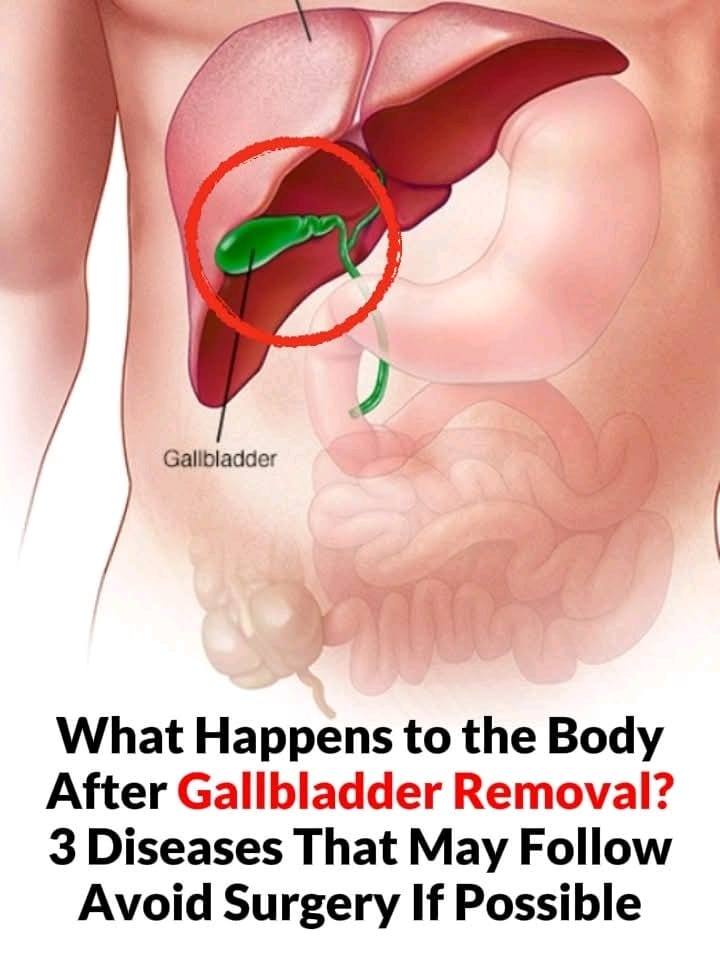
That headline is misleading and fear-based. Gallbladder removal is a common, well-studied surgery, and most people do not develop “3 diseases” afterward.
The procedure is called cholecystectomy (gallbladder removal), usually done for gallstones or inflammation.
What changes in the body after removal
- The gallbladder stores bile (which helps digest fat)
- After removal, bile flows directly from the liver into the intestine
- Digestion still works, but the body can’t store and release bile in large bursts anymore
Common short-term effects
Many people may notice:
- loose stools or mild diarrhea
- bloating or gas
- difficulty digesting very fatty meals at first
These usually improve over weeks or months as the body adjusts.
“3 diseases that may follow” — what’s exaggerated
Online posts often list scary conditions, but in reality:
1) Post-cholecystectomy symptoms (real but not a disease)
- Some people have ongoing digestive discomfort
- Often manageable with diet changes or medication
2) Bile reflux gastritis (rare)
- Irritation of the stomach from bile
- Treatable and uncommon
3) Diarrhea-related issues
- Some people have persistent loose stools
- Usually controllable with diet or bile-binding medicines
👉 These are not inevitable diseases, and many people never experience them.
Is surgery avoidable?
Sometimes yes, sometimes no:
- If gallstones are silent (no symptoms) → doctors may monitor only
- If there is pain, infection, or blockage → surgery is often the safest option
- Delaying needed surgery can lead to complications like infection or pancreatitis
Bottom line
Gallbladder removal is generally safe and effective, and most people live normal lives afterward. The “avoid surgery if possible” message is an oversimplification that can be dangerous if it delays necessary treatment.
If you want, tell me the symptoms or reason for surgery—I can explain whether surgery is typically recommended in that situation.
