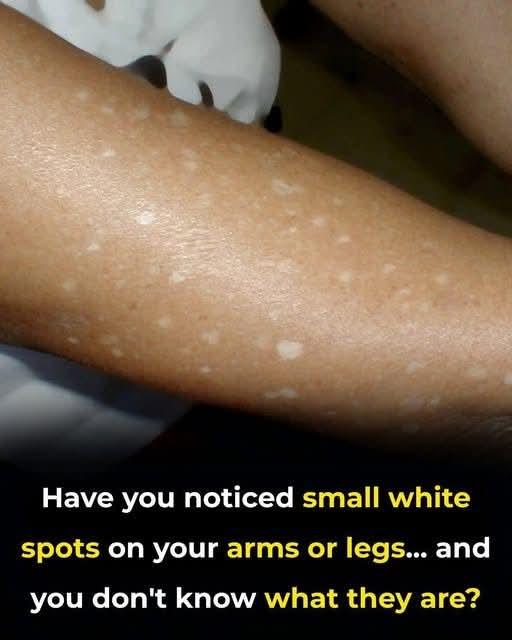
Idiopathic guttate hypomelanosis (IGH) is a common, harmless skin condition that causes small white spots on the skin.
What it looks like
- Tiny white or light-colored spots
- Usually flat and smooth
- Often appear on:
- forearms
- legs
- shins
- sometimes face
They are typically 2–5 mm in size and may slowly increase over time.
Who gets it
- Most common in people over 40–50 years old
- More noticeable in people with sun-exposed skin
- Both men and women can get it
Why it happens
The exact cause isn’t fully known (“idiopathic” means unknown cause), but likely factors include:
- Sun exposure (UV damage over time)
- Natural aging of skin pigment cells (melanocytes)
- Genetic predisposition
Is it dangerous?
- ❌ Not cancerous
- ❌ Not contagious
- ❌ Not painful or harmful
It is mainly a cosmetic skin change
Treatment options (if desired)
There is no required treatment, but cosmetic improvement may include:
- sunscreen (prevents new spots)
- topical retinoids
- laser treatments (in some cases)
- camouflage creams
Results vary, and many people choose no treatment.
Bottom line
Idiopathic guttate hypomelanosis is a benign age-related skin condition, mostly linked to sun exposure, and does not affect overall health.
If you want, I can help you distinguish it from vitiligo or other white skin patches—that’s a common confusion.
