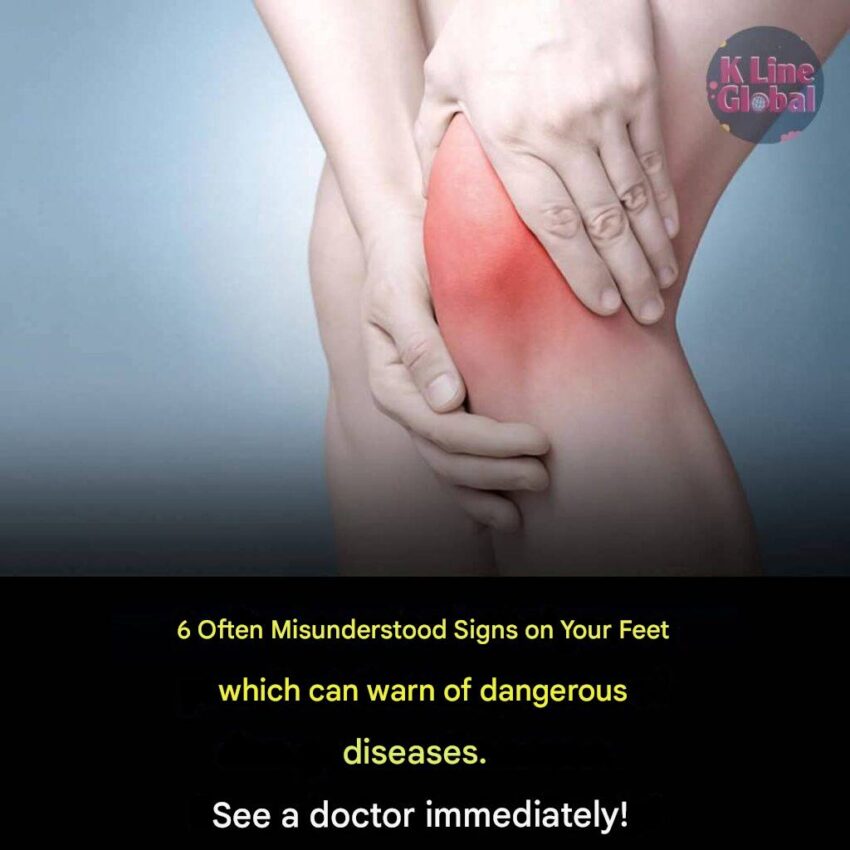
That’s another alarmist, clickbait-style headline. It mixes a bit of truth with a lot of exaggeration to scare people into clicking.
The truth behind it
Your feet can sometimes show signs of underlying health issues—but:
- There aren’t exactly “6 specific signs everyone should know”
- Most changes in feet are common and not dangerous
- “See a doctor immediately!” is often overstated
Real foot signs doctors actually pay attention to
Some examples that can be worth checking:
- Persistent swelling (edema)
Could be related to circulation issues, heart, kidney, or liver problems - Numbness or tingling
Sometimes linked to nerve issues, including Diabetes - Cold feet or color changes (pale/blue)
May indicate poor blood flow (circulatory problems) - Sores or wounds that won’t heal
Especially important in people with Diabetes - Severe pain in the big toe
Could be Gout - Yellow, thick nails
Often just a fungal infection—not dangerous, but treatable
Important reality check
- These signs don’t automatically mean serious disease
- Many have simple explanations
- Context (age, medical history, duration) matters a lot
When to actually see a doctor
You should get checked if:
- symptoms are persistent or worsening
- there’s pain, swelling, or infection
- you have risk factors like diabetes or circulation issues
Bottom line
Feet can give clues, but they’re not a dramatic warning system like these posts suggest. Most changes are not emergencies, but some are worth paying attention to if they persist.
If you want, you can describe any symptom you’re noticing—I’ll help you figure out how serious it might be.
