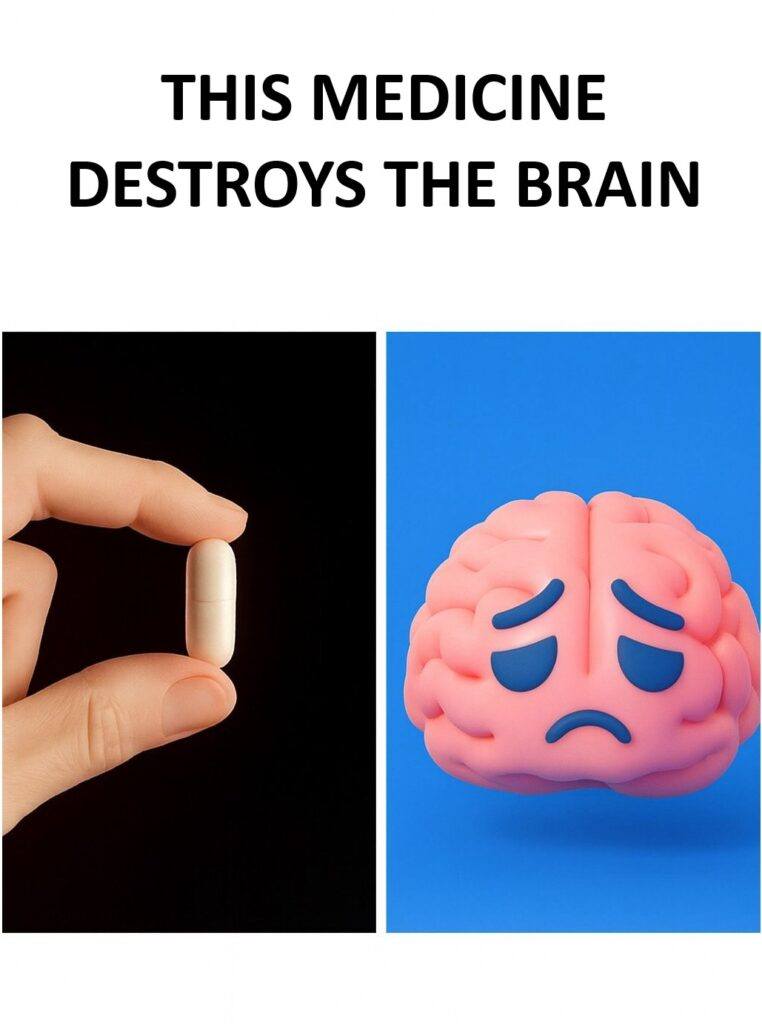
That phrase is a fear-based oversimplification and is usually not medically accurate without naming a specific medicine.
In reality:
⚠️ No medicine “destroys the brain” in general
Most medicines are designed to be safe at correct doses. However, some drugs can affect the brain in specific situations, such as:
1. Sedatives and sleeping pills (e.g., benzodiazepines)
Examples: diazepam, alprazolam, sleeping tablets
- Can cause drowsiness, memory problems, confusion (especially in older adults)
- Risk increases with long-term or high-dose use
- Usually reversible after stopping under medical supervision
2. Strong painkillers (opioids)
- Can slow thinking, cause confusion or sedation
- Risk of dependence and overdose if misused
3. Anticholinergic medicines
Found in some allergy, bladder, or sleep medications
- Can affect memory and thinking in older people
- Long-term high use may be linked with cognitive decline risk
4. Alcohol + drug interactions
Not a medicine alone, but important:
- Combining alcohol with sedatives or painkillers can severely affect brain function
5. Chemotherapy and some cancer drugs
- Can cause temporary “chemo brain” (memory and focus issues)
- Usually improves after treatment
🚨 Important truth
When people say “this destroys the brain,” it often means:
- confusion
- memory issues
- sedation
- temporary cognitive slowing
But permanent brain destruction from standard prescribed medicines is very rare and usually involves overdose, misuse, or special medical conditions.
✔️ Key takeaway
A safer, accurate statement would be:
“Some medicines can affect memory, thinking, or alertness—especially in older adults or when misused—but most do not permanently damage the brain when used correctly.”
If you tell me the exact medicine name, I can explain its real effects clearly and honestly.
